Acne Prone Skin Makeup Tips That Actually Help
A breakout rarely waits for a convenient day. It shows up before engagement photos, the week of a wedding, or right before a formal event when you want your skin to feel calm and predictable. That is exactly why acne prone skin makeup tips matter – not because makeup should hide who you are, but because the right approach can help skin look polished, balanced, and still like skin.
For acne-prone clients, the goal is not to pile on coverage until everything disappears. In professional makeup, that usually backfires. Texture can look heavier on camera, active blemishes can appear more raised, and irritated skin often reacts poorly to too many layers. A better result comes from thoughtful skin prep, strategic product placement, and formulas that work with the skin you have that day.
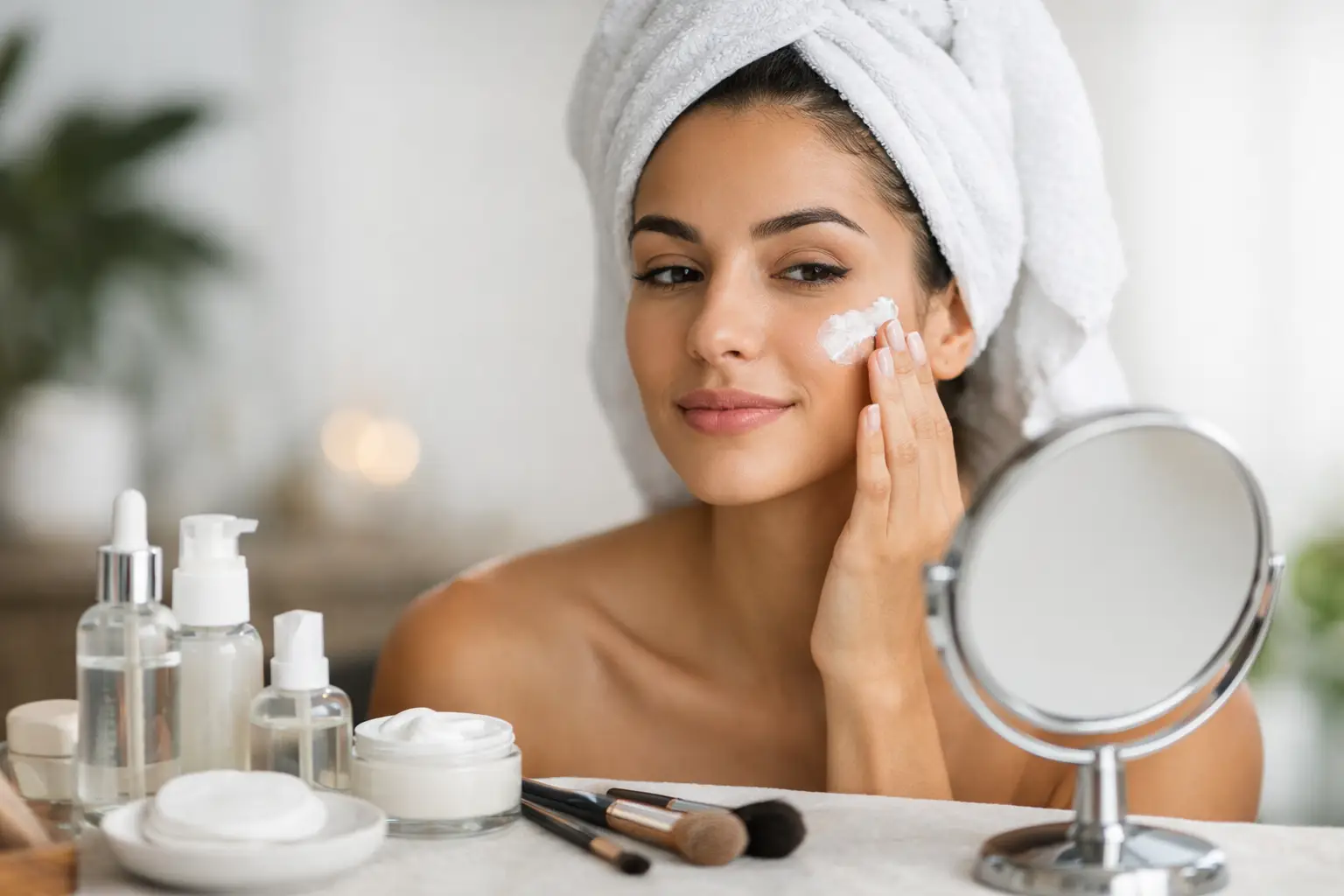
Acne prone skin makeup tips start with skin prep
The makeup application itself is only part of the result. Skin prep has a direct effect on how foundation sits, how long concealer lasts, and whether texture is softened or emphasized.
Start with clean skin, but avoid anything harsh right before makeup. If your skin feels stripped, tight, or over-exfoliated, foundation tends to cling unevenly and redness can look more obvious. A gentle cleanse followed by lightweight hydration usually gives the best base. Even oily, breakout-prone skin still needs moisture. When skin is dehydrated, it often compensates with more oil, which can lead to makeup breaking apart faster.
This is also where restraint matters. If you are preparing for a big event, that morning is not the time for a strong peel pad, a new acne treatment, or a deeply mattifying mask. Those products may be useful in your regular routine, but right before makeup they can leave the skin reactive or flaky. Calm skin almost always photographs better than aggressively treated skin.
Primer can help, but only if it matches what your skin is doing. If you are very oily through the T-zone, a shine-controlling primer in those areas may improve wear. If you have healing breakouts with dryness around them, a smoothing or hydrating primer on the cheeks may be more useful. Full-face mattifying products are not always the answer. Sometimes they flatten the skin and make dry texture more visible.
Choose coverage based on the type of breakout
Not all acne needs the same makeup technique. A flat post-breakout mark behaves very differently than an inflamed blemish or an area with peeling from acne medication.
For discoloration, a medium-coverage foundation and a small amount of targeted concealer are often enough. For redness, color correction can help, but only in very controlled amounts. Too much green corrector under foundation can create a dull cast, especially in flash photography. For raised blemishes, the aim is to reduce the look of redness and help the area blend into the surrounding skin. Trying to make a bump completely invisible usually leads to thick buildup that calls even more attention to it.
If your skin is currently textured, lighter layers are your best friend. One even layer of foundation sheered where possible, followed by pinpoint concealing only where needed, tends to look cleaner than a full mask of high-coverage product. This is especially true for bridal makeup and professional photography, where skin should still look dimensional and natural at close range.
Foundation finish matters more than people think
Very matte foundation can sound ideal for acne-prone skin, but the finish is not always forgiving. On some clients, a soft natural finish actually looks smoother because it reflects a little light and does not grip every dry edge. On the other hand, very dewy formulas can slide on oilier skin or make active breakouts look more pronounced.
The sweet spot is often a natural-to-soft-matte finish with buildable coverage. It gives enough longevity for events and photos while still allowing the skin to look alive. This is one of those areas where it depends on your skin type, the season, and how long you need the makeup to wear.
Application technique can make or break the result
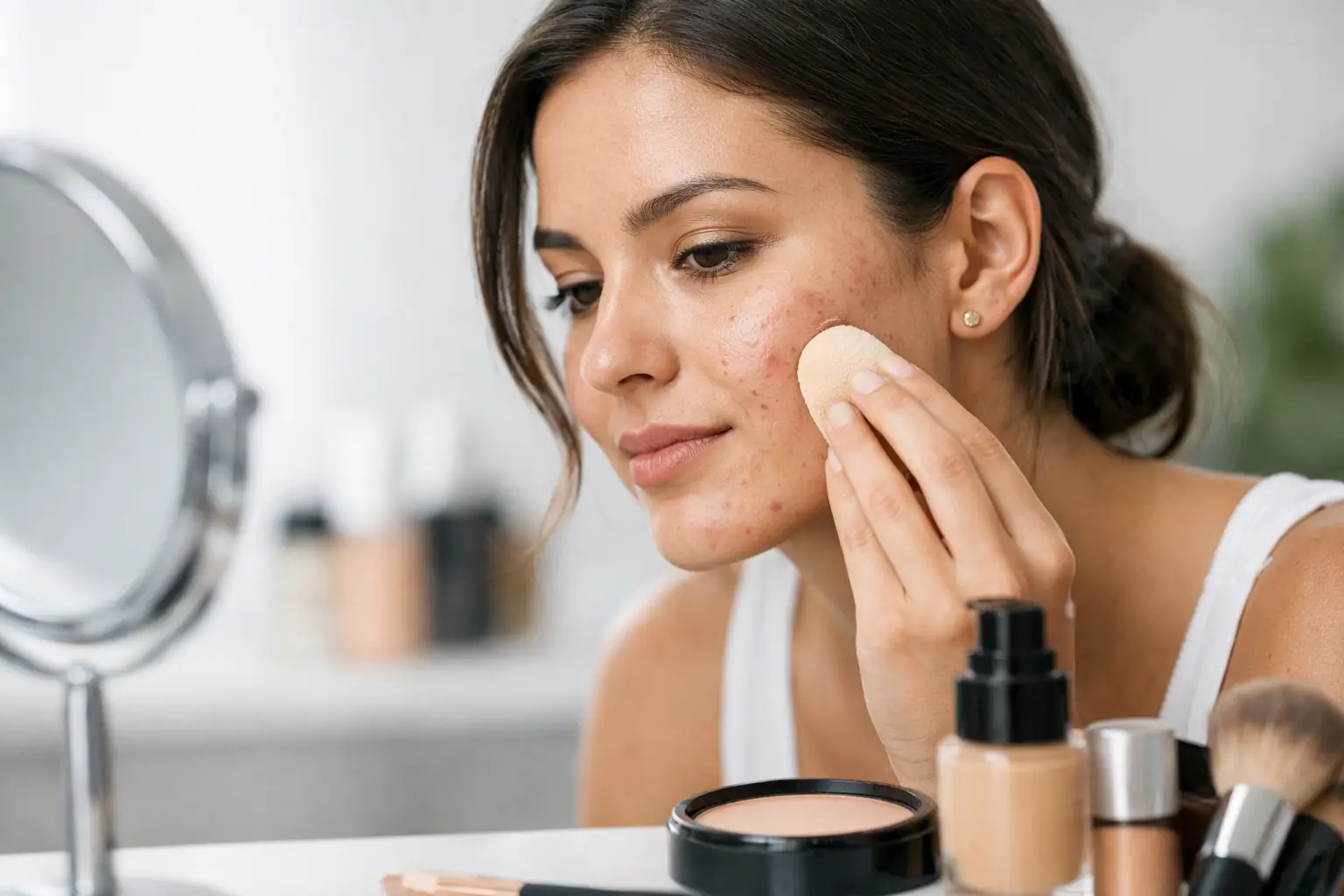
When skin is breaking out, rubbing is rarely helpful. Pressing and stippling products into the skin generally creates a smoother finish than sweeping them around with a heavy hand. This keeps coverage where you want it and avoids lifting dry patches or irritating active areas.
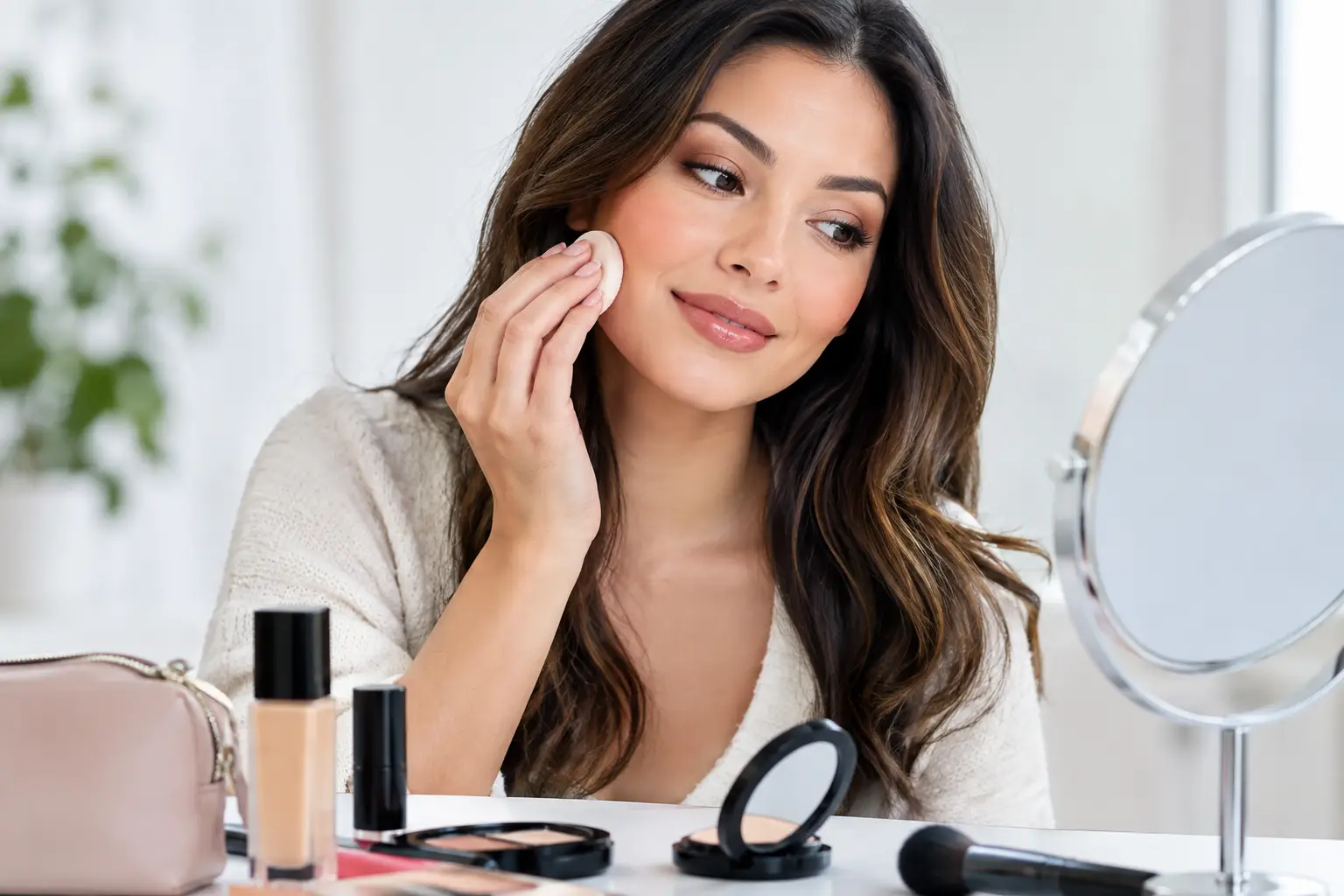
A damp sponge can be beautiful for pressing foundation into the skin and softening edges. A small brush is often better for precise concealer work on individual blemishes. The most reliable approach is usually a combination of both – foundation applied in thin layers first, then concealer added only where extra correction is needed.
Let each layer settle before adding more. If you apply foundation, concealer, powder, and then more concealer too quickly, the area can start to cake. Giving cream products a moment to set helps you judge what still truly needs attention.
How to conceal blemishes without making them obvious
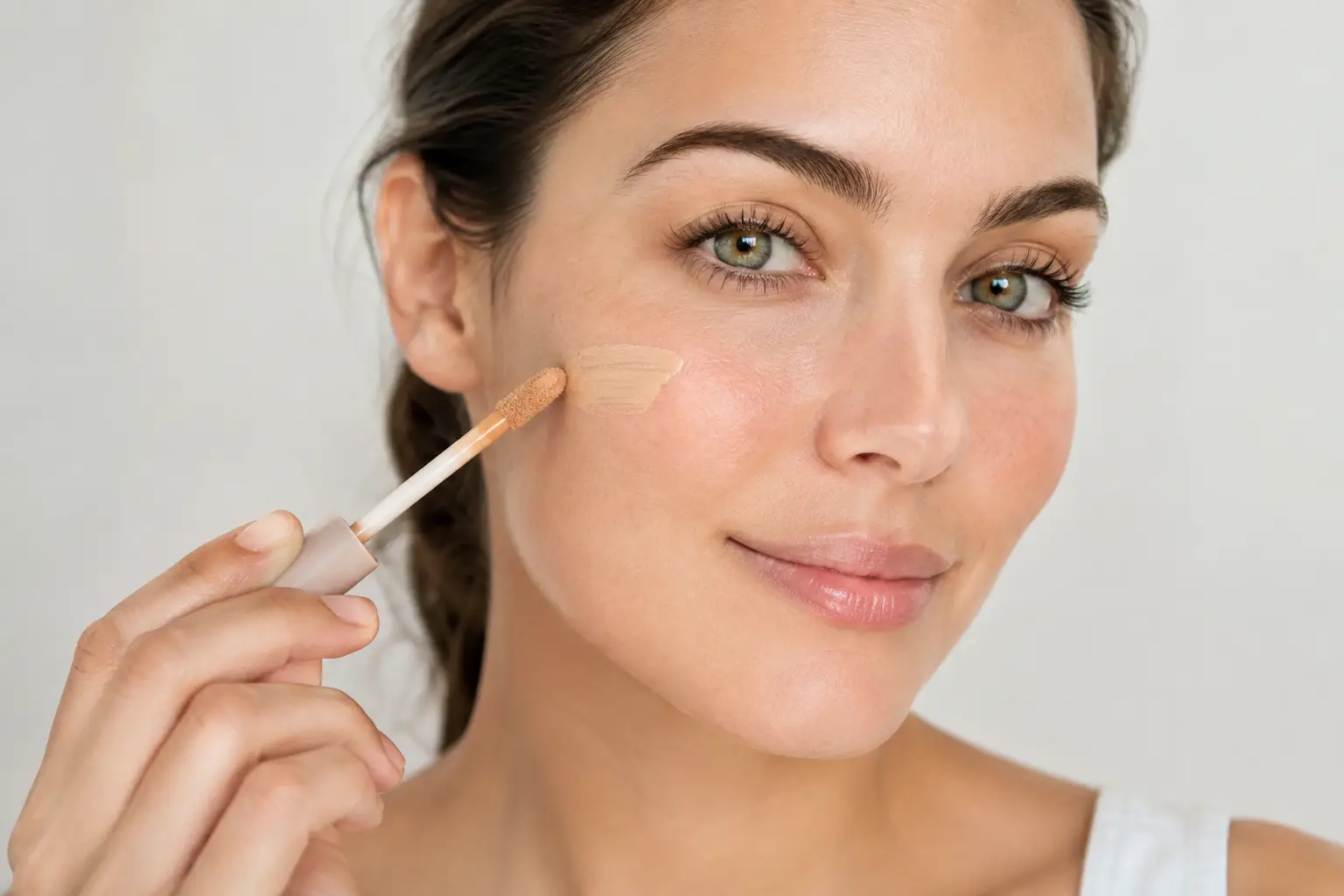
Use a concealer shade that matches your foundation or skin tone closely. Going too light on a blemish can highlight texture rather than disguise it. Apply a very small amount directly over the area, then soften only the edges so the center coverage stays in place.
If a blemish is very red, a tiny touch of correction underneath may help, but keep the layers thin. Powdering between layers can sometimes improve hold, though too much powder on a textured spot can turn it dry and heavy. This is where an experienced hand makes a difference. The technique is subtle, not dramatic.
Powder and setting spray should be strategic
People with acne-prone skin are often told to powder everything. In reality, over-powdering can make the complexion look flat, dry, or overly makeup-heavy.
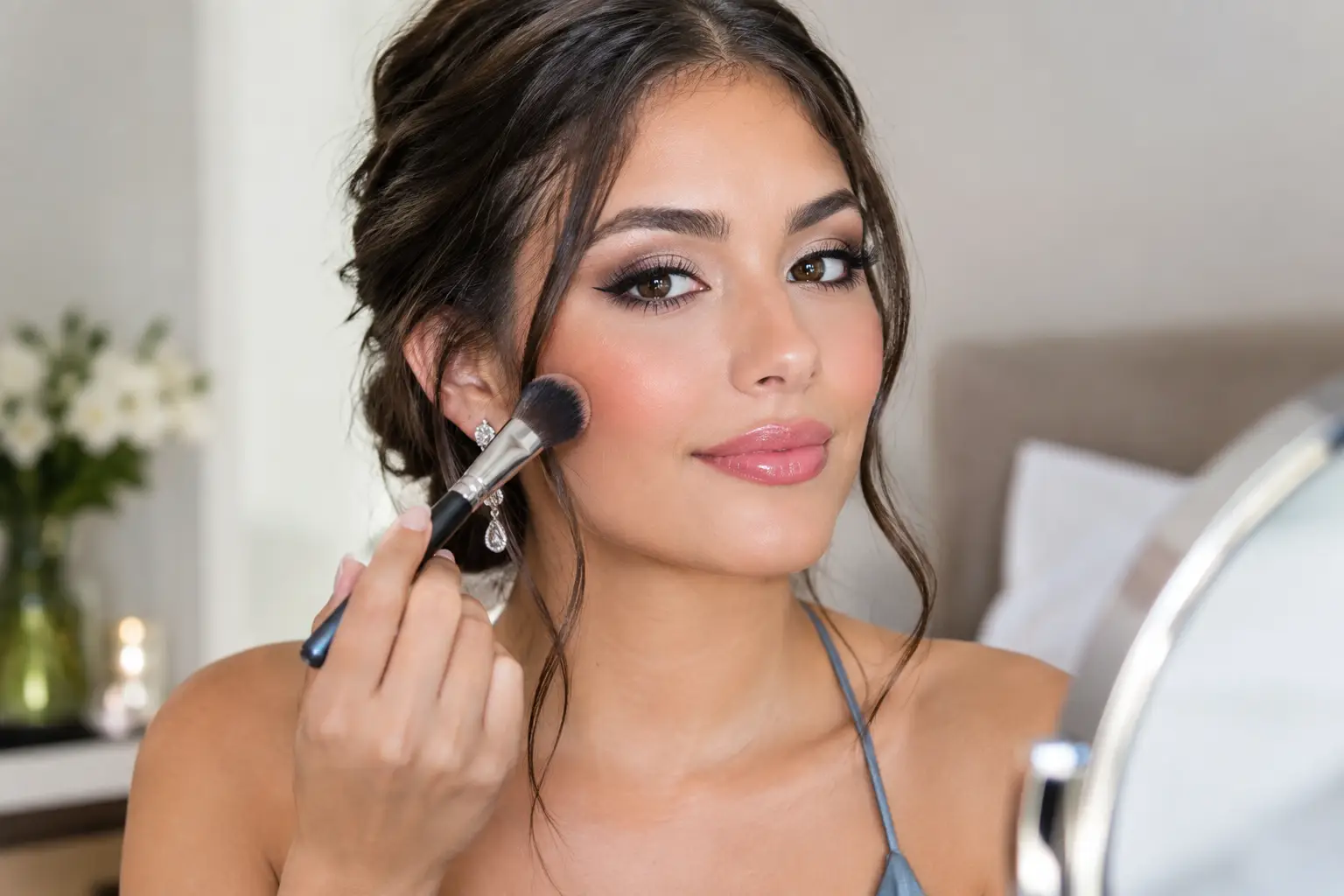
The better approach is targeted setting. Focus powder where oil tends to break through first – usually around the nose, center of the forehead, and chin. On blemishes, a small amount of finely milled powder can lock in concealer, but it should be pressed on gently rather than packed on. If you need your makeup to last through a long event, a setting spray can add longevity and help melt powder into the skin for a more natural finish.
This balance matters for special occasions because the skin has to look good in person and on camera. Longevity matters, but so does realism.
Be careful with products that can irritate acne-prone skin
Acne-prone does not automatically mean sensitive, but there is often some overlap. Fragrance-heavy products, overly drying formulas, or layering too many active ingredients beneath makeup can all create problems.
If you know your skin is reactive, keep your pre-event routine simple. Use the products you already trust. If you are working with a makeup artist, share what you are using and whether your breakouts are active, hormonal, medication-related, or healing. That context helps with product selection and application choices.
Hygiene matters just as much as formula. Clean brushes, sanitized products, and proper kit practices are essential when working on breakout-prone skin. It is a baseline professional standard, but it is especially important when the skin barrier is already stressed.
Acne prone skin makeup tips for big events and photos
Event makeup has different demands than everyday makeup. It needs to hold up through time, lighting, movement, and close-up photography. That does not mean it should feel heavy.
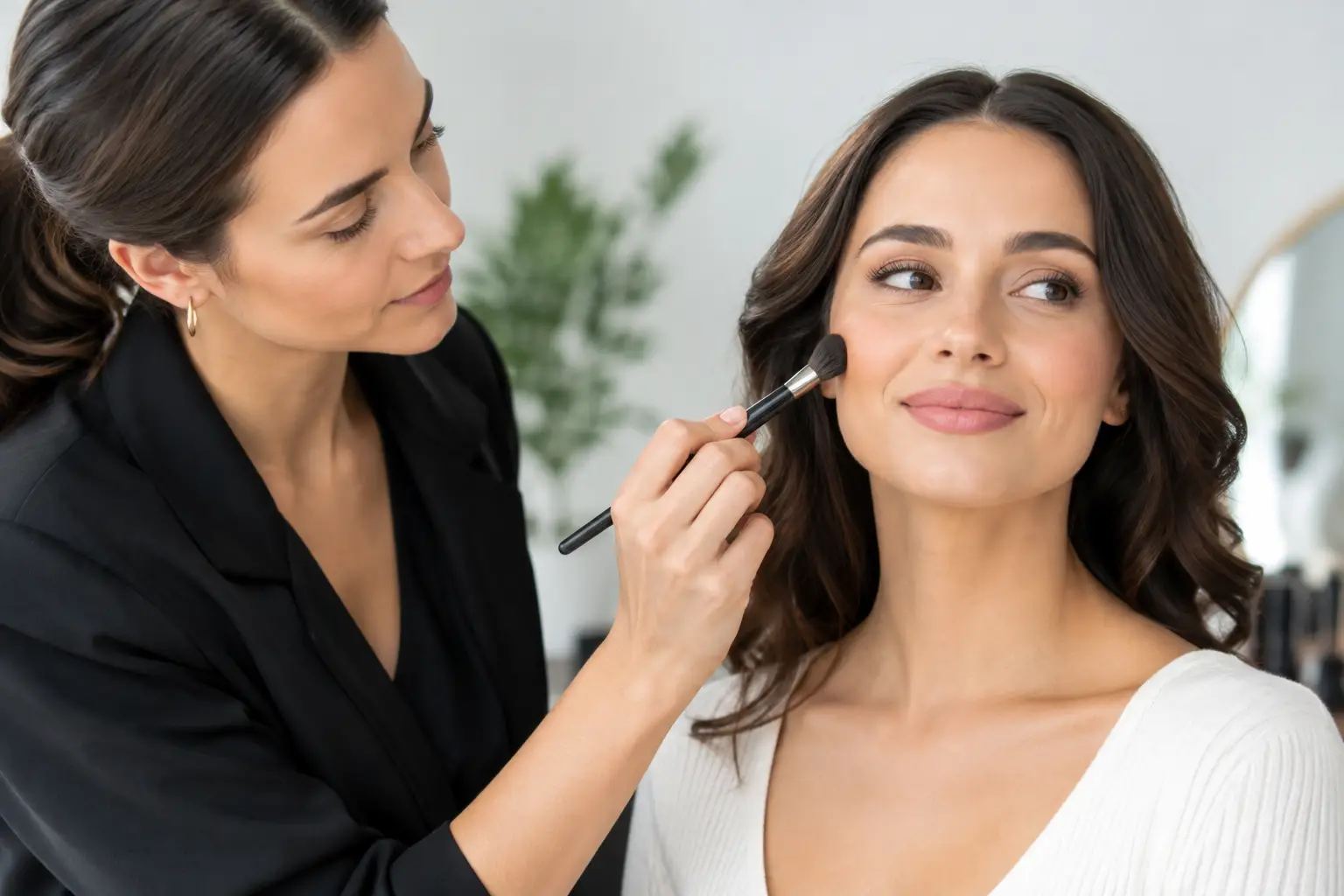
If you are preparing for a wedding, prom, gala, or photoshoot, consider a trial if your skin tends to fluctuate. A trial allows you to see how products wear, how much coverage feels comfortable, and whether your makeup still looks like you. For many clients, that peace of mind is just as valuable as the look itself.
“Living in Washington DC, where humid summers and frequent indoor-to-outdoor transitions are part of everyday life, makes oil control and non-comedogenic formulas especially important for keeping acne-prone skin calm and makeup looking fresh all day.”
Timing matters too. If you are planning facials, extractions, or stronger acne treatments, avoid scheduling them too close to your event. Skin often needs time to settle. Last-minute skin panic usually creates more issues than it solves.
For touch-ups, keep it simple. Blotting papers, a clean puff, and a small amount of powder are usually enough. Adding more foundation throughout the day can disrupt the finish and make textured areas more noticeable.
When less makeup is actually the more flattering choice
This can be the hardest advice to trust when you are self-conscious about breakouts, but it is often the most effective. Not every area needs maximum coverage. Sometimes leaving a little natural skin visible creates a fresher, more refined result than trying to perfect every inch.
Soft glam on acne-prone skin works best when the complexion is balanced, not erased. A thoughtfully evened skin tone, well-placed concealer, gentle definition in the eyes, and a polished lip or cheek can shift the focus beautifully without making the skin feel overworked.
That is the philosophy behind skin-focused makeup artistry at Taylor Bailey Makeup Artist. The aim is not to disguise you. It is to create a finish that feels comfortable, lasts well, and lets you walk into your event feeling like the most polished version of yourself.
If your skin is breaking out before an important day, you do not need perfection to look radiant. You need calm preparation, smart product choices, and makeup that respects your skin instead of fighting it.