Makeup for Branding Photos That Looks Like You
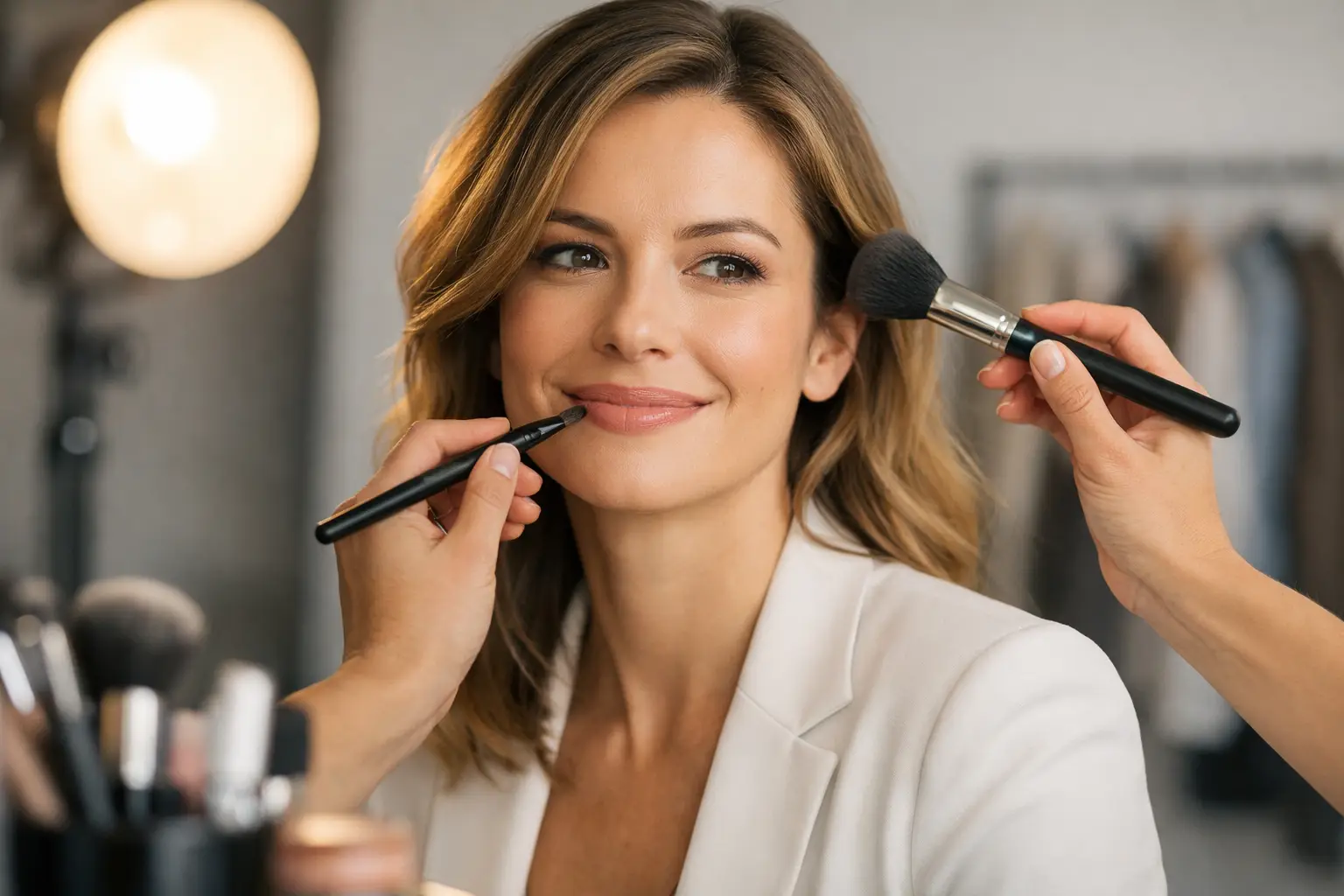
A branding session asks more of your makeup than a quick headshot. Your images may appear on your website, social media, speaker materials, press features, and client emails for months or years. Makeup for branding photos should help you look polished, rested, and recognizably yourself in every one of those places – not like a different person under studio lights.
The best result is not about wearing the most makeup. It is about choosing a look that supports your professional presence, photographs beautifully, and still feels comfortable when you catch your reflection between shots.
What Makeup for Branding Photos Should Accomplish
Branding photography is personal. A real estate professional may want an approachable, trustworthy finish for neighborhood photos, while a creative founder may want a little more color and definition to match a bolder visual identity. A coach, attorney, speaker, or corporate leader may need makeup that reads confident and refined without distracting from her message.
That is why a one-look-fits-all approach rarely works. Your makeup should be considered alongside your wardrobe, location, lighting, brand colors, and the way you want clients to feel when they see your image. The goal is intentional enhancement: even-looking skin, softly defined eyes, natural dimension, and color that brings life to the face.
Camera work can soften features, especially in bright window light or professionally lit spaces. A touch more definition than your everyday routine may be needed, but it should be placed with restraint. You should still feel like yourself, only more polished.
Start With Skin, Not Coverage
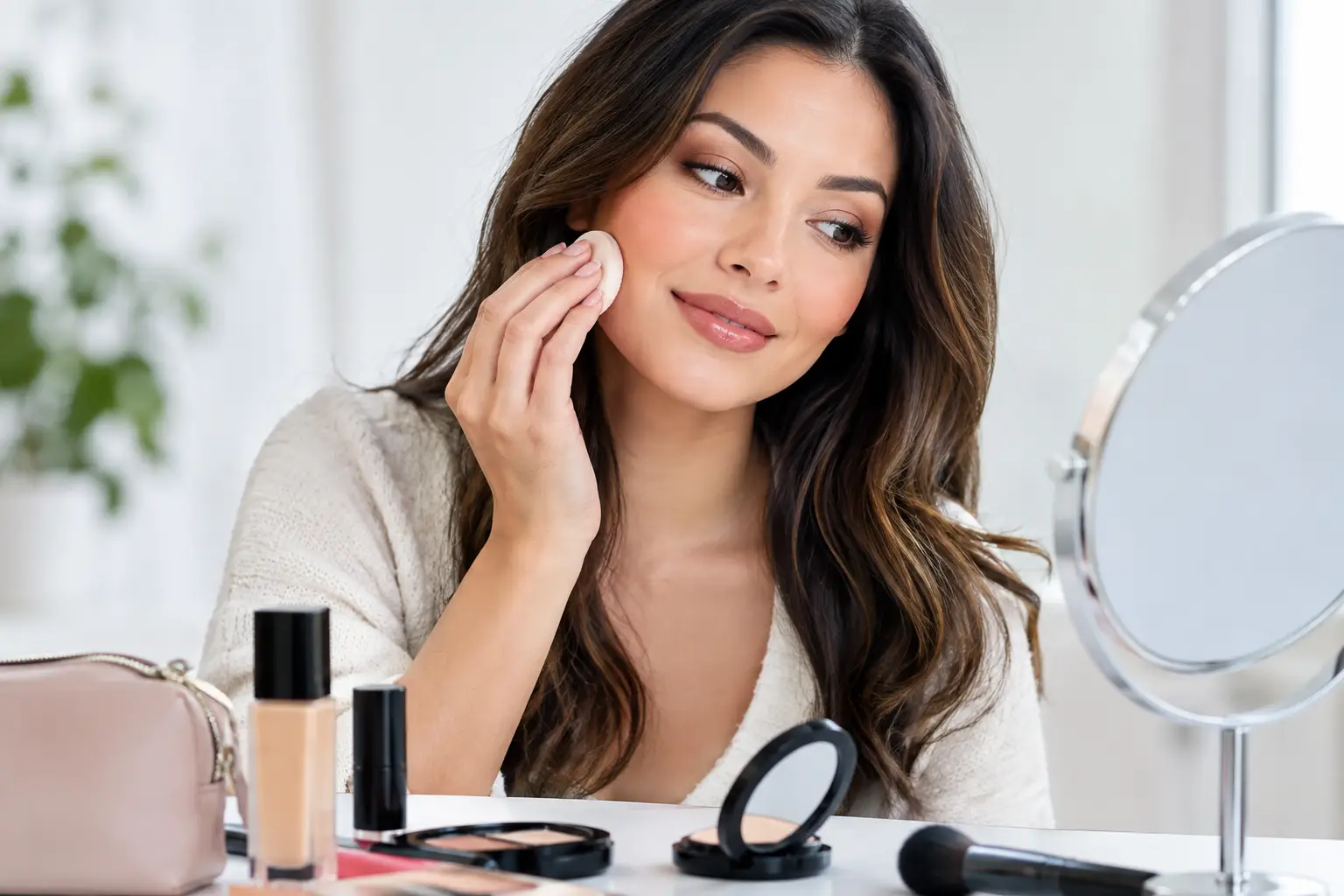
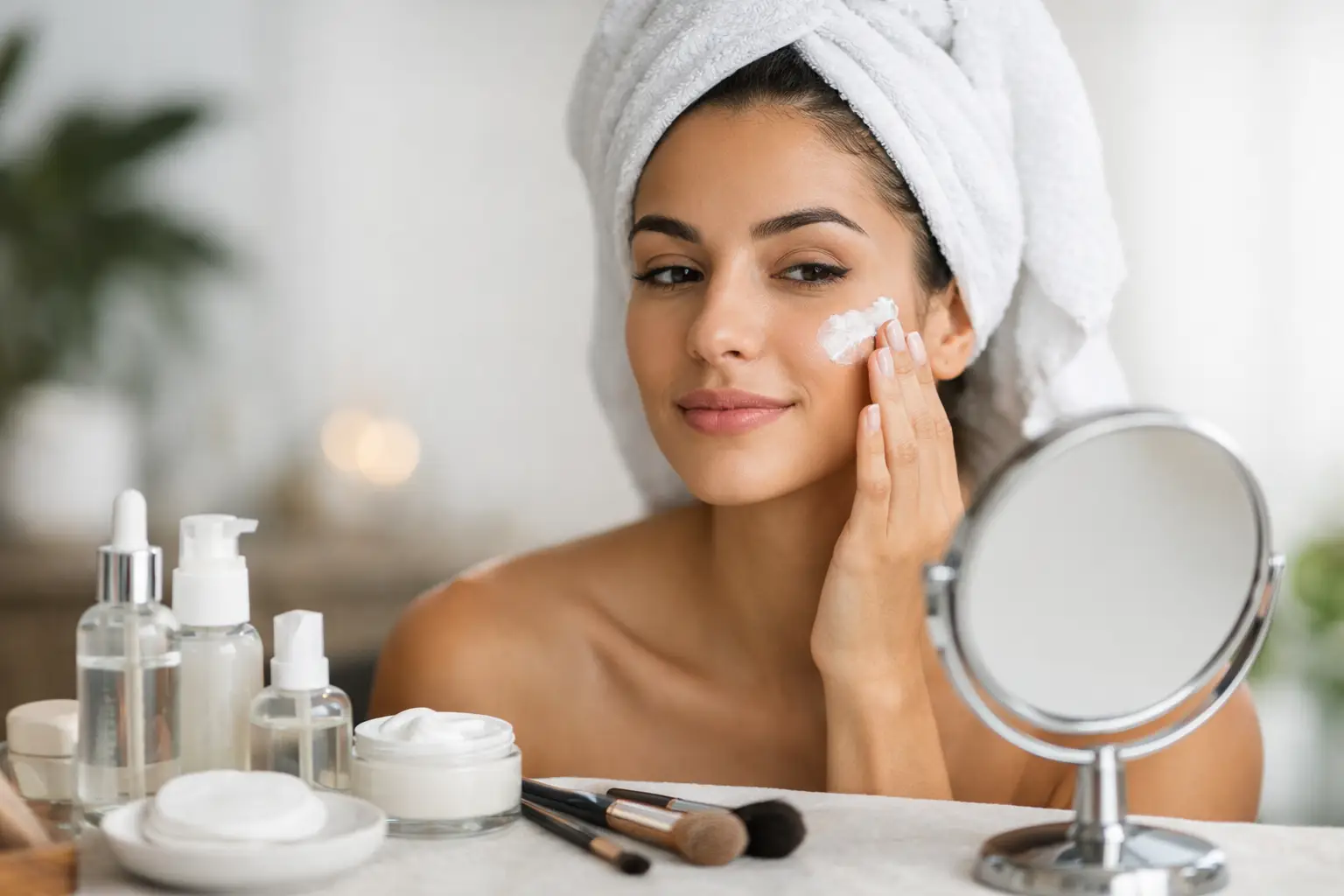
Beautiful photo makeup begins long before foundation. When skin is properly prepared, complexion products apply more smoothly, wear longer, and require less layering. This matters especially for clients with dry patches, sensitivity, acne-prone skin, texture, or concerns about makeup settling into fine lines.
A professional artist will assess what your skin needs that day rather than relying on a fixed product routine. Some skin benefits from lightweight hydration and a luminous base. Other skin types need strategic oil control to prevent unwanted shine. These are not opposites – skin can be dehydrated and oily at the same time, which is why thoughtful preparation matters.
In the week before your session, keep your skincare consistent. Avoid introducing a strong exfoliant, peel, retinoid, or new product that could cause irritation or unexpected breakouts. Gentle cleansing, hydration, and daily sunscreen are usually the most supportive choices. If you plan a facial, schedule it far enough ahead that your skin has time to settle.
On photo day, arrive with a clean face and your usual skincare if requested by your artist. Avoid applying heavy oils or unfamiliar primers right before makeup unless they are part of the planned routine. The right makeup application starts with understanding how your skin is behaving in real time.
Healthy-looking skin is not always matte
Many clients request matte makeup because they are concerned about shine in photos. While excess oil can reflect light, a completely flat complexion can sometimes make the skin appear dry or lifeless on camera. A better approach is a balanced finish: soft radiance in high points of the face, with targeted setting through the T-zone and areas that tend to break down first.
This creates dimension without a greasy appearance. It also gives your photographer a complexion that looks fresh across different lighting conditions.
Choose Colors That Support Your Brand and Wardrobe
Your makeup does not need to match your brand colors literally. In fact, a bright lipstick chosen only because it matches a logo can become the first thing people notice in every photo. Instead, consider the overall feeling of your visual brand.
If your clothing palette is clean, neutral, and elevated, soft rose, warm nude, berry-neutral, or muted mauve tones often photograph beautifully. If your brand is vibrant or fashion-forward, a stronger lip or defined eye can be a lovely choice, provided it still feels authentic to you. The most flattering shade is one that complements your skin tone while working with what you are wearing.
It is also worth thinking about outfit changes. If you are wearing several looks, choose makeup that can transition easily. A polished neutral base can move from a blazer and trousers to a dress or more relaxed lifestyle images. A lip change, added liner, or a little more cheek color can create variety without requiring a full reapplication.
Why Flash Photography Changes the Makeup Plan
Makeup that looks lovely in a bathroom mirror does not always perform the same way in professional photography. Flash and bright lighting can reveal uneven texture, emphasize a heavy powder finish, or create white cast from products with certain light-reflecting ingredients.
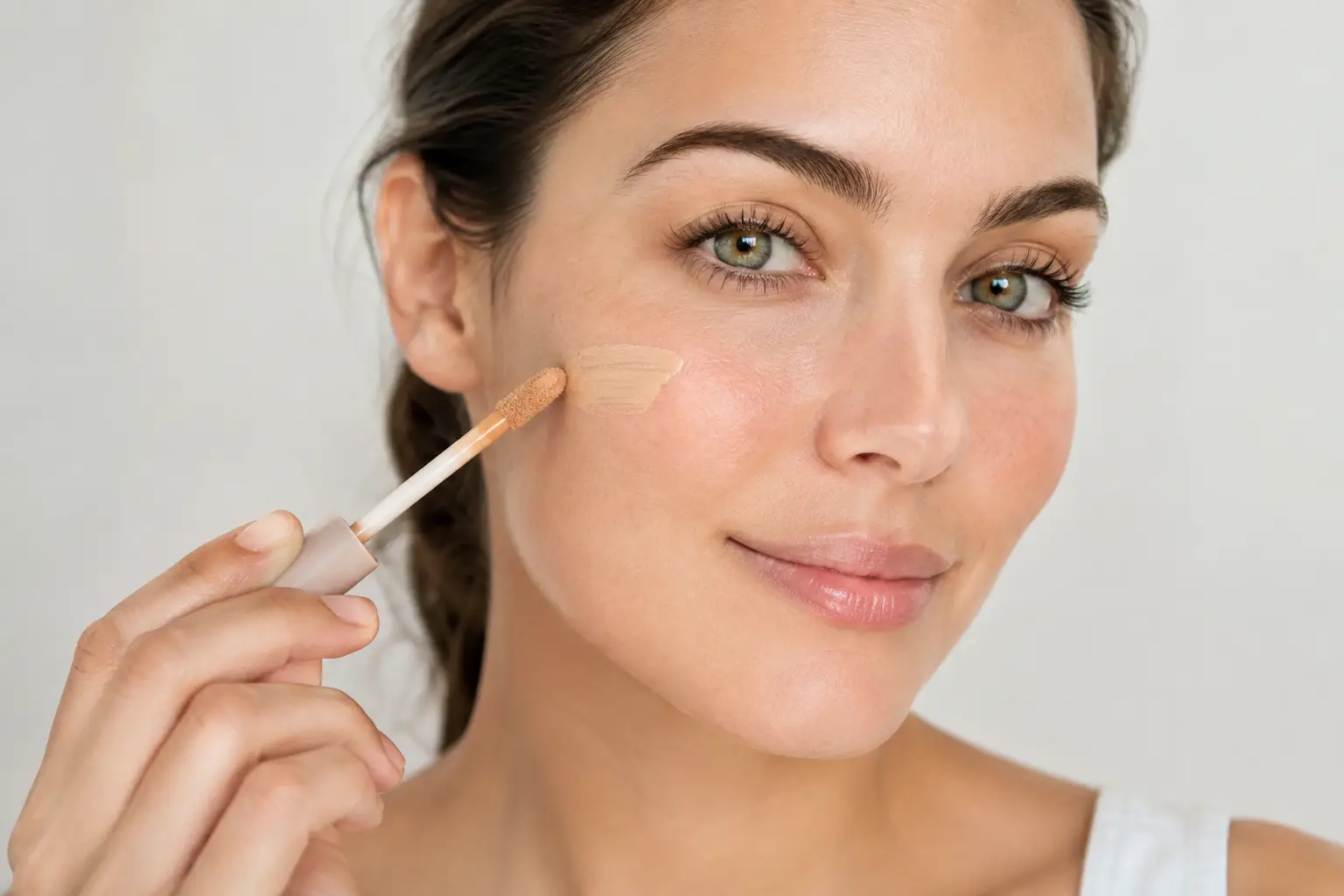
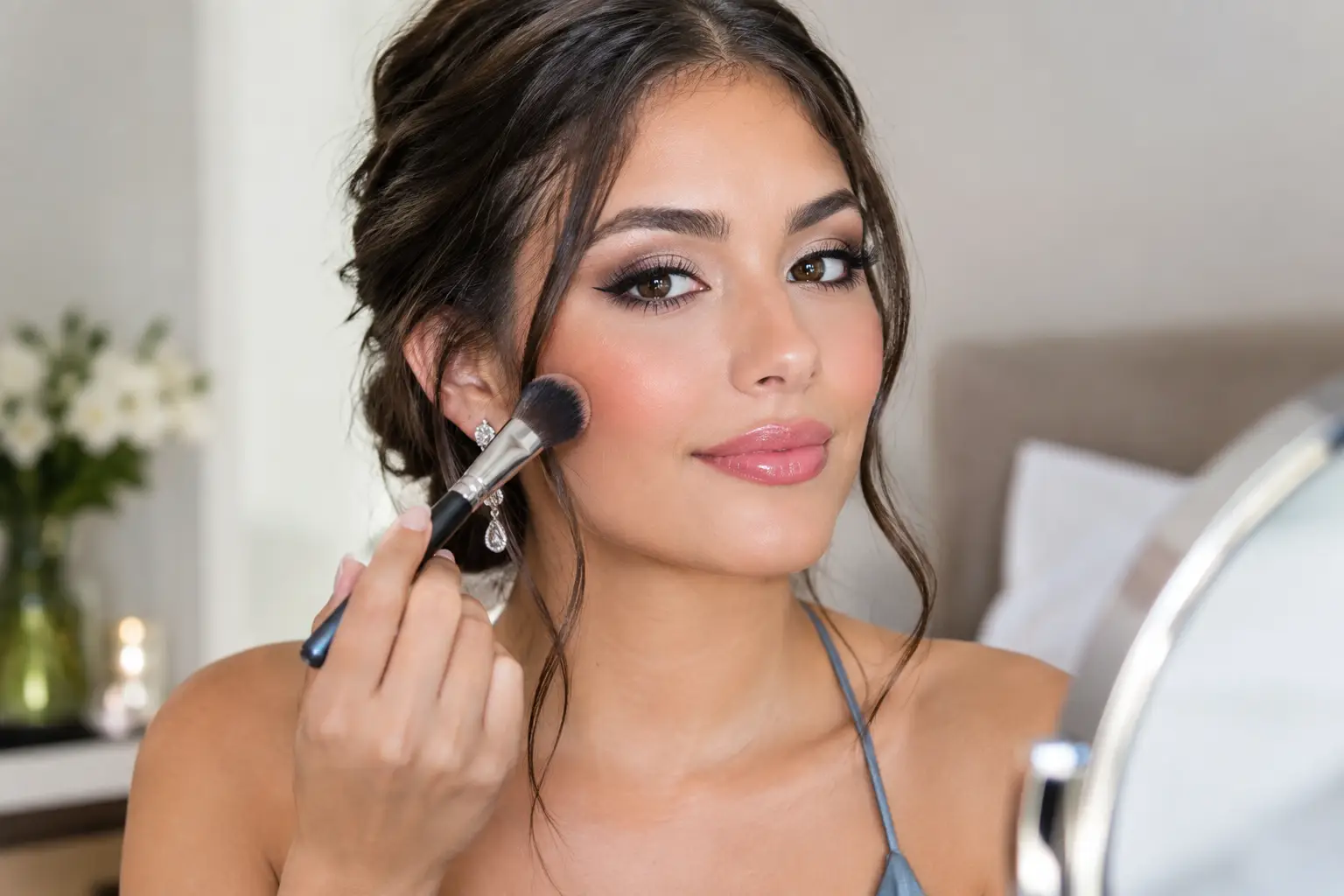
This is where professional product selection and technique make a meaningful difference. The focus should be on complexion products that blend naturally into the skin, controlled setting, and formulas that hold up through movement, warmth, and multiple outfit changes. Concealer should brighten and correct without appearing thick. Contour and bronzer should add gentle structure rather than obvious stripes. Highlighter should be subtle enough that it does not become a reflective patch on the cheekbone.
False lashes are also a personal choice, not a requirement. A soft individual or natural strip lash can open the eyes and help them read in photos. But if lashes feel too dramatic or uncomfortable, well-defined natural lashes can be just as effective. Your comfort shows in your expression, and that matters more than following a trend.
Plan the Timing So You Are Not Rushed
Photo-day beauty should feel calm. Rushing through makeup can affect both the experience and the finished result, particularly when you are balancing wardrobe changes, hair styling, travel, or children and pets for lifestyle images.
For most branding sessions, schedule makeup before hair if your hairstyle allows it, or coordinate the order with your hair professional. Allow enough time for skin preparation, application, and a final check in the lighting where possible. If you are adding hair styling, build in a buffer rather than planning each service back to back with no room to breathe.
Bring your outfits, accessories, and any inspiration images to the appointment. Seeing the actual clothing helps guide choices around lip color, blush depth, and overall intensity. If you have a signature feature you love – freckles, a beauty mark, naturally full brows, or curls that frame your face – say so. A personalized application protects the features that make your look yours.
Consider touch-ups for longer sessions
For a short indoor headshot session, a carefully packed touch-up kit may be all you need. For a half-day shoot, outdoor locations, summer humidity, or multiple wardrobe changes, on-site touch-up support can be a worthwhile addition. It allows for blotting, lip refreshes, powder where needed, and small adjustments between setups.
The right choice depends on the length and conditions of your shoot. It is less about perfection and more about preserving a consistent, polished finish across the full gallery.
Communicate What You Want – and What You Do Not Want
Reference photos can be helpful, but they work best when they communicate a feeling rather than a strict replica. Lighting, skin tone, eye shape, and editing style all affect how a look translates from one person to another. Share images that reflect the level of coverage, glow, eye definition, and lip color you are drawn to.
Be equally clear about your non-negotiables. If you do not wear much makeup, dislike the feeling of a full-coverage foundation, prefer to avoid contour, or want to keep your freckles visible, those details matter. A skilled artist can build a camera-ready look around your preferences instead of asking you to abandon them.
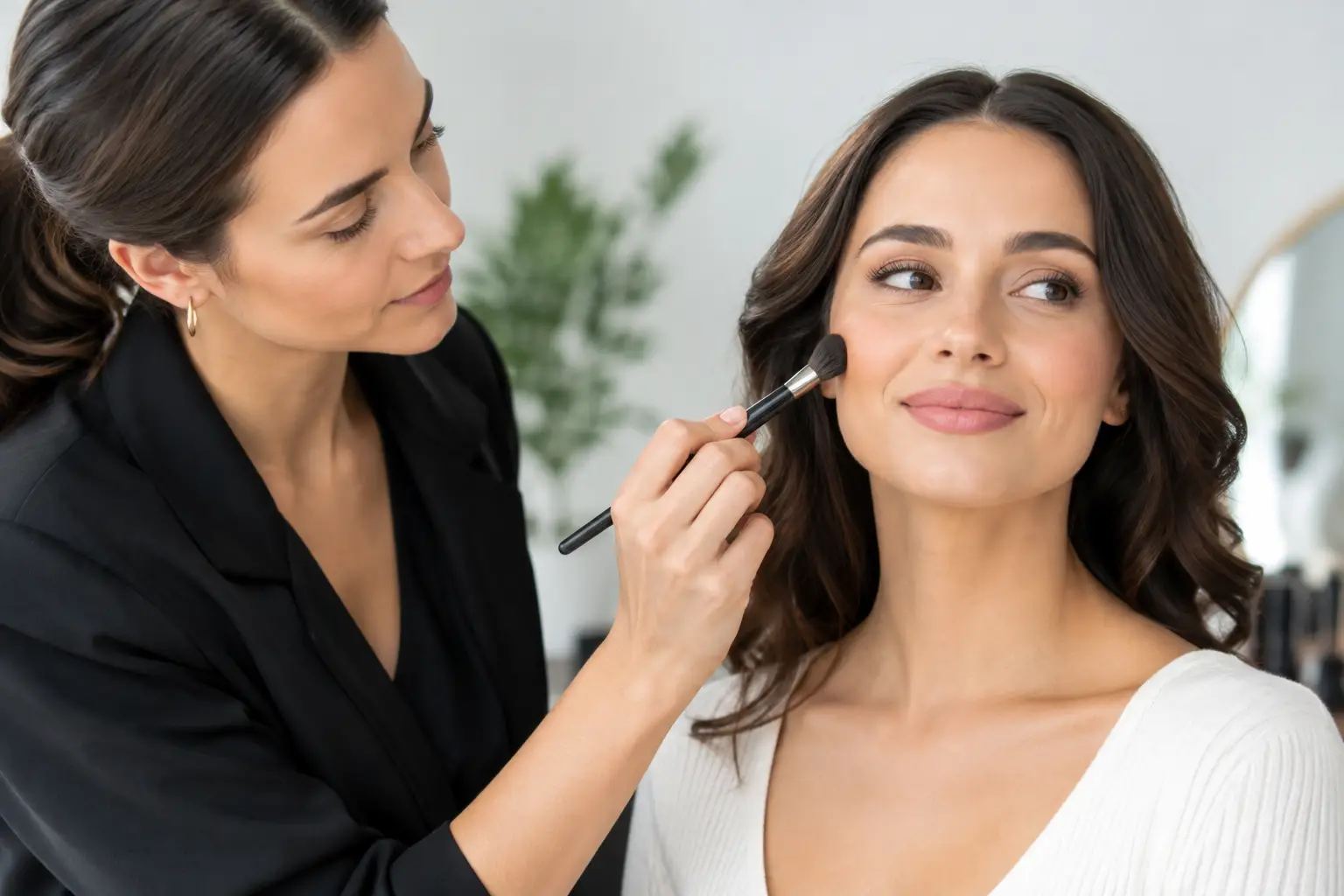
For clients in Northern Virginia and Washington, DC, Taylor Bailey Makeup Artist provides on-location artistry designed around this balance: polished enough for the camera, comfortable enough to feel fully present in front of it.
A Final Check Before You Step on Set
Before photos begin, take a few moments to look at your makeup in natural light and on your phone camera. Check that your foundation blends into your neck and chest, your lip color is even, and your brows feel balanced. This is also the time to remove a stray powder mark from clothing or soften anything that feels stronger than you expected.
Then let the makeup do its job. The most compelling branding photos come from relaxed expressions, clear posture, and the confidence of knowing your appearance reflects the professional you already are. When your makeup feels like an elevated version of your everyday self, you are free to focus on the work, story, and personality your images are meant to share.