Wedding Morning Beauty Schedule Example
The morning of your wedding should feel calm, not crowded. A thoughtful wedding morning beauty schedule example gives the day structure so you are not guessing when to eat, when to get dressed, or whether hair and makeup are running behind. When the timeline is realistic, everyone feels more relaxed, and that shows in your photos.
One of the most common planning mistakes is assuming beauty happens faster on a wedding day than it does in real life. It usually takes longer. There are more people, more moving parts, more touch-ups, and more interruptions. A strong schedule builds in breathing room so your makeup artist and hairstylist can work carefully and you can actually enjoy the getting-ready portion of the day.
A realistic wedding morning beauty schedule example
Let’s use a common scenario: a bride, four bridesmaids, and one mother of the bride, with both hair and makeup services booked on location. The ceremony begins at 4:00 p.m., and everyone should be fully finished, dressed, and photo-ready by 1:30 p.m. for detail shots, candids, and first-look timing.
In this example, beauty services begin at 7:00 a.m. That might sound early, but once you account for setup, skin prep, hair prep, service time, dressing, and photography, it is often the right call.
Sample timeline for a 4:00 p.m. ceremony
7:00 a.m. – Hair and makeup teams arrive, unload, sanitize, and set up
7:15 a.m. – First services begin for bridal party and family members
9:30 a.m. – Light breakfast break and hydration check if needed
10:45 a.m. – Bride begins hair or makeup, depending on the service flow
12:15 p.m. – Bride switches to the second beauty service
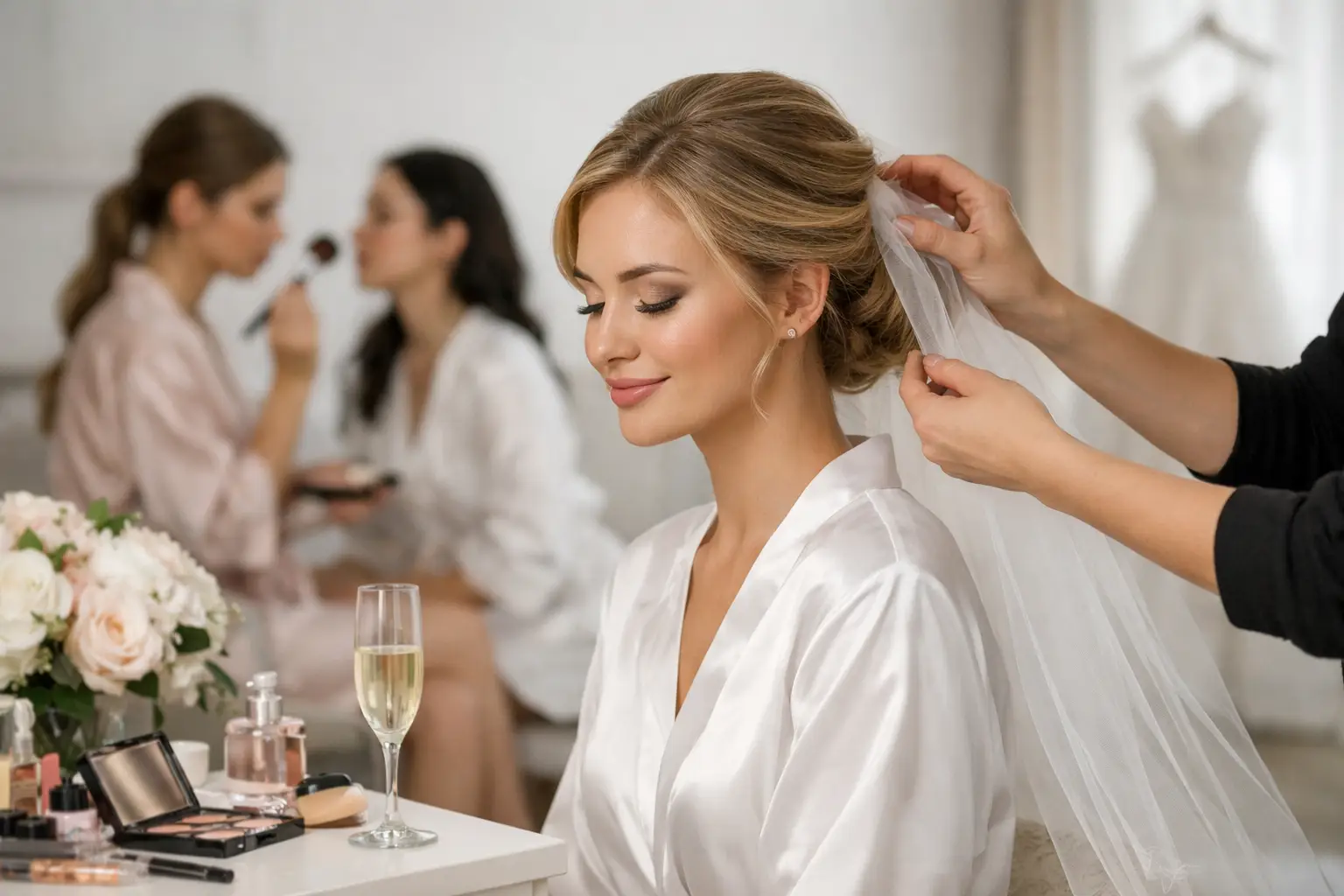
1:15 p.m. – Final bride touch-ups, veil placement, lipstick, and overall polish check
1:30 p.m. – Everyone finished and in robes or getting dressed for photos
2:00 p.m. – Bride gets into gown with support from family or planner
2:15 p.m. – Photographer captures getting-ready images and finishing details
2:45 p.m. – First look or pre-ceremony portraits begin
That timing will shift based on how many people are receiving services, how many artists are on the team, and whether flower girls or additional family members are included. Still, the overall rhythm is a good benchmark. The key is finishing beauty earlier than you think you need to, not later.
Why this schedule works
A good wedding morning beauty schedule example is not just a list of times. It reflects how wedding mornings actually unfold. Someone misplaces earrings. A bridesmaid steps away for a phone call. The photographer asks for a few extra robe photos. These moments are normal, and your timeline should absorb them without creating stress.
This is also why the bride is usually not first and not last in the chair. If the bride goes first, makeup and hair may need more refreshing by the time photos begin. If the bride goes absolutely last, any delay affects the entire day. Placing the bride near the end, but not at the very end, tends to create the best balance between freshness and flexibility.
For skin-focused soft glam, timing matters even more. Beautiful makeup starts with proper prep, which means clean skin, the right moisturizer, thoughtful product layering, and enough time for everything to settle well. Rushing those steps can affect texture, wear time, and comfort.
How much time to allow per person
As a general rule, professional bridal makeup often takes 45 to 60 minutes per person, while bridal makeup for the bride may take 60 to 75 minutes. Hair timing can vary even more depending on style. A polished blowout or soft waves may move more quickly than a formal updo or a style that requires clip-in extensions.
This is where many couples underestimate the morning. Six people receiving both hair and makeup is not a casual block of time. It is a carefully managed production, even when it feels quiet and easy in the room. If you want an unrushed experience, the schedule needs to reflect the actual service time.
It also depends on the look you want. Soft glam does not mean fast glam. Natural-looking makeup often takes just as much attention as a fuller look because the skin has to look fresh, balanced, and refined on camera without appearing heavy in person.
What to do before beauty begins
The smoothest wedding mornings start the night before. Make sure everyone knows where they need to be, what time services begin, and whose turn is first. Have robes, dresses, jewelry, undergarments, shoes, invitation suites, and accessories in one place. If you are using hair extensions or a veil, keep those visible and ready.
On the morning itself, eat something with protein, start hydrating early, and arrive with clean, dry hair unless your hairstylist has given different instructions. Skin should be clean and free of leftover makeup. If you have a personalized skincare plan from your artist or esthetic professional, follow that instead of trying a new mask or exfoliant at the last minute.
A calm room helps more than people expect. Good natural light, cleared counters, a few designated seats, and limited foot traffic make the entire process feel more elevated and less chaotic.
Building your own schedule around your wedding
If you are creating your own timeline, start at the moment you need to be completely photo-ready, then work backward. Not ceremony-ready. Photo-ready. Those are often two different times.
From there, account for getting dressed, detail photos, touch-ups, and any first look. Then calculate beauty services based on the number of people, not wishful thinking. If your artist says the morning needs an earlier start or an additional team member, that recommendation is there to protect your experience.
Questions that affect the timing
A few details can shift the morning significantly. Are you doing a first look? Are you traveling from the getting-ready location to the venue? Does your photographer want staged robe photos before anyone changes? Is anyone in the party prone to running late? Are you planning on a more intricate hairstyle, or does someone have very long or thick hair?
Each answer changes the flow. That does not mean the schedule has to become complicated. It just means your beauty timeline should be customized, not copied blindly from someone else’s wedding.
Common timing mistakes to avoid
The biggest mistake is not leaving buffer time. A close second is adding extra services late in the planning process without adjusting the start time or artist count. Another common issue is having the bride interrupted constantly during her appointment. Questions about flowers, transportation, and family logistics should go to a planner, maid of honor, or another point person whenever possible.
There is also a trade-off between a very large getting-ready group and a peaceful morning. If you want many people included, you may need a larger beauty team and an earlier start. If you want a slower, quieter atmosphere, keeping the service list tighter may be the better fit.
How a bridal trial helps the morning run better
A bridal trial is not just about choosing a look. It is one of the best tools for improving your timeline. When your artist already knows how your skin responds to prep, how much coverage you prefer, and which details matter most to you, the wedding day appointment becomes more efficient and more relaxed.
It also helps you make decisions in advance. Lip color, lash style, skin finish, and any sensitivity concerns can be worked through before the wedding morning. That means fewer last-minute changes and more confidence in the chair.
For brides in Northern Virginia and Washington, DC, where timelines often involve travel, hotels, and venue coordination, that clarity can make a meaningful difference. Taylor Bailey Makeup Artist approaches wedding mornings with that exact mindset – polished, personalized, and calm enough to let you enjoy the moment while still looking fully camera-ready.
A better goal than a packed schedule
The best wedding morning beauty schedule example is not the one that fits the most into the shortest amount of time. It is the one that gives you space to feel like yourself. Space to sip your coffee while your skin is being prepped. Space to laugh with your bridesmaids without watching the clock. Space to step into your dress without feeling rushed or flustered.
That kind of timeline does not happen by accident. It comes from honest planning, professional guidance, and enough margin to let beauty be part of the celebration instead of a race. If your schedule supports that feeling, you are on the right track.