How to Choose Makeup Shades That Look Like You
The right makeup shade should not feel like a mask. It should make you look rested, even, and a little more luminous – whether you are walking down the aisle, posing for a headshot, or getting ready for a formal evening in Washington, DC. Learning how to choose makeup shades starts with seeing your skin clearly, rather than trying to match a trend, a filter, or the color of a product in its bottle.
A flattering makeup look is rarely about finding one “perfect” shade. It is about choosing colors that work together with your skin’s depth, undertone, natural contrast, and the lighting you will be in. That is why a foundation that looks lovely in a store can feel slightly off in daylight, or why a blush you loved on someone else can disappear on your complexion.
How to Choose Makeup Shades for Your Skin
Start with your bare skin in natural daylight, ideally near a window. Remove makeup, give your skin a few minutes to settle, and look at the skin along your jawline, neck, and upper chest. Your face may have more redness, discoloration, or sun exposure than the rest of your body, so matching foundation to your cheek alone can create an obvious line at the jaw.
Your goal is harmony. Foundation should visually connect your face, neck, and chest without making any one area look lighter, darker, warmer, or more muted than the others. For special events and photography, this matters even more because flash and professional lighting can emphasize differences that are subtle in person.
Know your skin depth
Skin depth refers to how light or deep your complexion is. Most makeup lines group shades as fair, light, medium, tan, deep, or rich, but these labels vary widely from brand to brand. A “medium” foundation in one line may be much lighter or warmer than a medium shade in another.
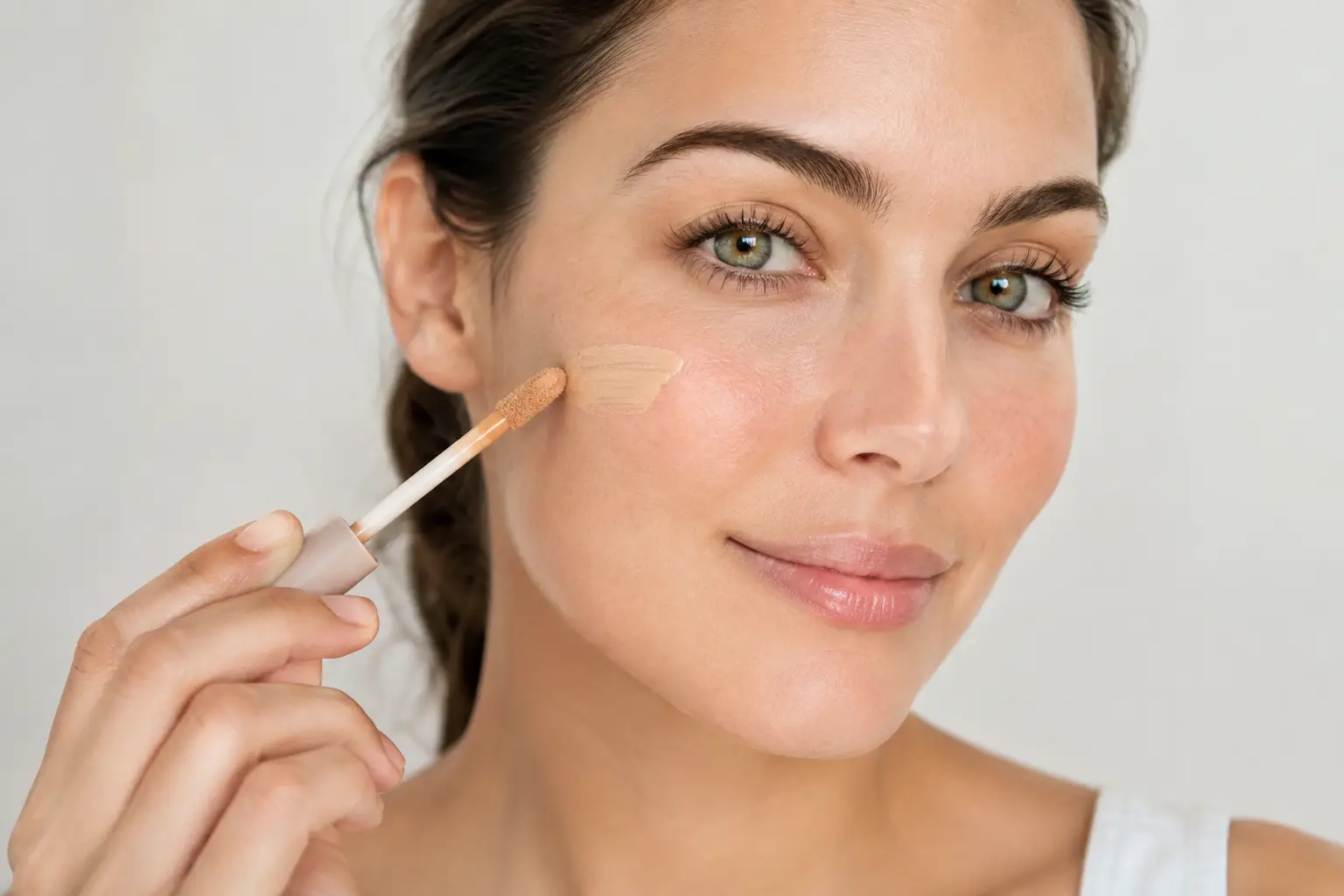
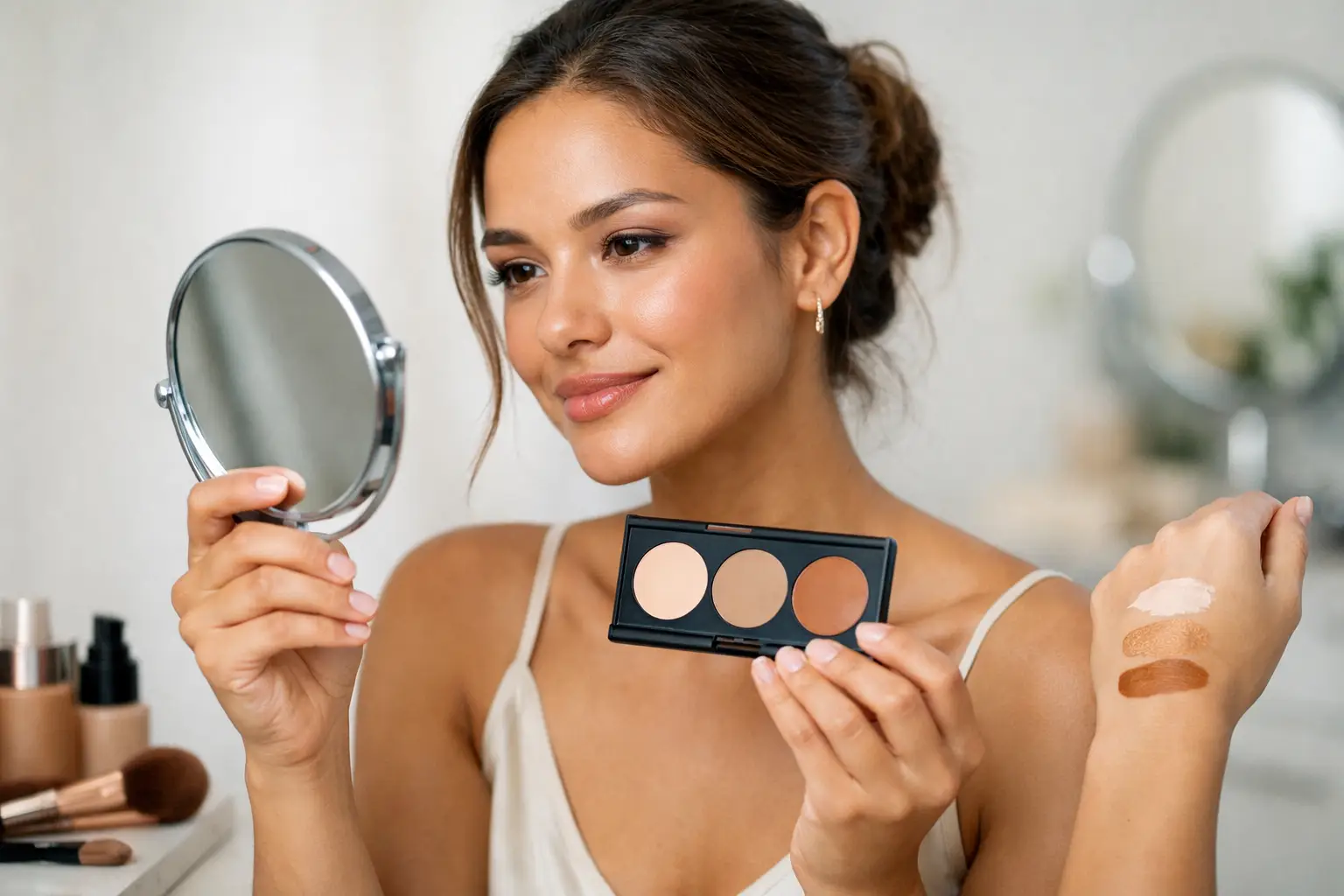
Rather than relying on the name, swatch two or three close shades in vertical stripes along the jawline. Let them sit for several minutes before deciding. The best match is usually the one that seems to disappear into the skin. If one swatch looks a little too light and another looks a little too dark, a professional artist may mix shades to create a more exact match. This is particularly helpful through seasonal changes, when your skin tone may shift after time outdoors.
Identify your undertone, but do not overthink it
Undertone is the subtle color beneath the surface of your skin. It is different from surface concerns like redness, acne marks, or hyperpigmentation. Most people fall somewhere on a spectrum of cool, warm, neutral, or olive undertones.
Cool undertones tend to lean rosy, pink, or bluish. Warm undertones often show more golden, peach, or yellow tones. Neutral undertones have a balanced mix, while olive skin may have a green-gray or golden-green cast that can be difficult to match with foundations that are overly pink or orange.
Veins, jewelry preferences, and the “white shirt test” can offer clues, but they are not rules. If you like both gold and silver jewelry, that does not automatically make you neutral. If your skin is deep, looking at veins may not be especially useful. The most reliable test is how the actual foundation behaves against your jaw and neck in daylight.
A common mistake is choosing a foundation that matches visible facial redness instead of the skin beneath it. This can leave the complexion looking too pink. In most cases, redness is better addressed with targeted color correction or a light layer of concealer, while foundation is matched to the surrounding skin.
Choose Foundation and Concealer as a Pair
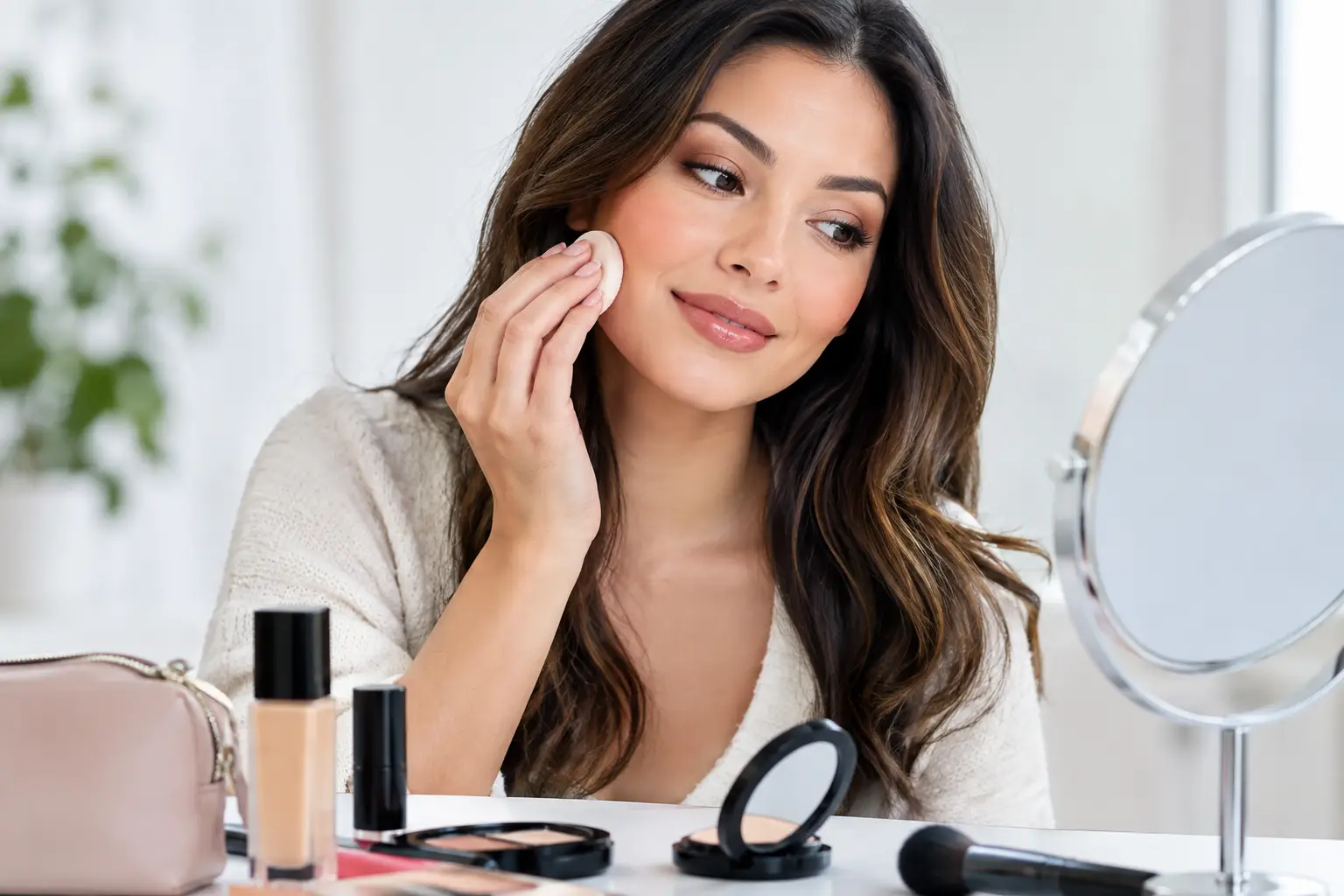
Foundation creates the overall tone of the complexion. Concealer has a more specific job: brightening, covering, or both. They do not always need to be the exact same shade.
For blemishes, dark marks, and areas of redness, choose a concealer that closely matches your foundation. A lighter concealer over a breakout can turn it gray or draw more attention to texture. For the under-eye area, a concealer that is about one shade lighter can add brightness without creating a stark, bright triangle beneath the eyes.
The formula matters as much as the color. Dry or mature skin often looks more natural with a flexible, hydrating foundation and minimal powder. Oily or combination skin may prefer a long-wear formula with strategic setting through the T-zone. Acne-prone or sensitive skin benefits from thoughtful skin prep and clean application practices, not necessarily heavier coverage.
For wedding makeup, photo sessions, and long celebrations, a true shade match also needs to wear well. Some foundations oxidize as they interact with skin oils, becoming slightly darker or warmer after application. Give a test application time before committing, especially for an important event.
Select Blush, Bronzer, and Contour With Intention
These three products are often confused because they all add dimension, but their colors should serve different purposes.
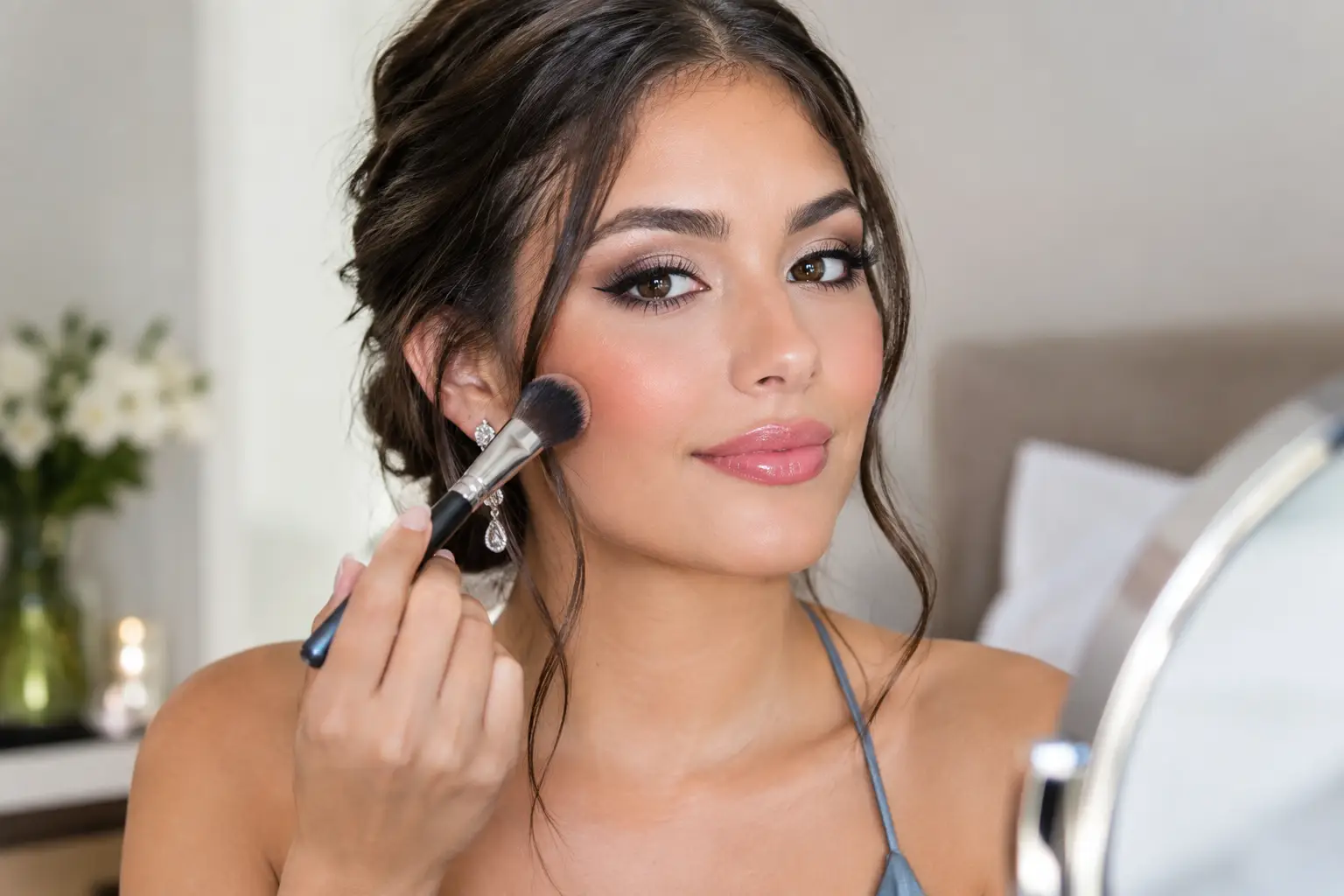
Blush brings life back to the cheeks. Soft pinks, mauves, berries, peaches, corals, and warm rose tones can all be beautiful, depending on your undertone and the effect you want. Fair to light cool complexions often suit soft rose or mauve beautifully, while peach and apricot can brighten warm or golden skin. Medium to deep complexions can carry richer berry, terracotta, plum, and vibrant coral shades with exceptional warmth and radiance.
There is room for personal preference here. A cool-toned client can still wear peach blush, and a warm-toned client can wear berry. The key is choosing a version with enough depth and pigment to show up naturally on your skin, then blending it into the rest of the makeup.
Bronzer should add the appearance of warmth, as if your skin has been gently touched by the sun. It should not be dramatically darker than your complexion or heavily orange. For very fair skin, a light neutral tan may look more believable than a traditional bronze. For deep skin, richer warm browns, red-browns, or golden bronzes can add dimension without turning ashy.
Contour is cooler and more muted than bronzer because it is meant to mimic a soft shadow. If contour looks gray, muddy, or stripe-like, it is usually too deep, too cool, or applied too heavily. For a refined soft glam finish, subtle placement is more convincing than a sharply carved cheek.
Let Your Eyes and Lips Support the Overall Look
When choosing eye makeup, consider your eye color, hair color, outfit, and the level of contrast in your features. Brown eyes are especially versatile and can wear bronze, plum, taupe, olive, chocolate, and soft rose tones. Blue eyes often stand out beside warm copper, peach, terracotta, or soft brown. Green and hazel eyes can look striking with plum, mauve, burgundy, and warm bronze.
Still, eye color is only one part of the decision. A bride wearing a romantic ivory gown may want a softly defined champagne and taupe eye, while a guest attending an evening gala may prefer more depth in chocolate, bronze, or espresso. For professional headshots, the most polished choice is often a neutral eye look that defines the eyes without distracting from your expression.
Lip color should balance the rest of your makeup rather than compete with it. A nude lipstick is not one universal beige. The best nude has enough pink, peach, rose, brown, or berry in it to complement your natural lip tone. If a nude lipstick makes you look washed out, it is likely too light, too opaque, or missing the warmth or depth your complexion needs.
For long events, consider the practical side of the shade as well. A glossy pale lip may require frequent touch-ups, while a satin rose, berry, or soft red can fade more gracefully. A lip liner close to your natural lip color can also make almost any lipstick look more polished and wearable.
Test Makeup Where It Will Be Seen
Lighting changes color. Makeup chosen under bright store lighting may look different outdoors, in a ballroom, or under camera flash. When possible, check your completed look in daylight, indoor lighting, and a quick phone photo with flash. You are not looking for perfection in every setting, but you do want to catch obvious foundation mismatch, excessive shine, flashback from powder, or a lip color that reads much cooler or brighter than expected.
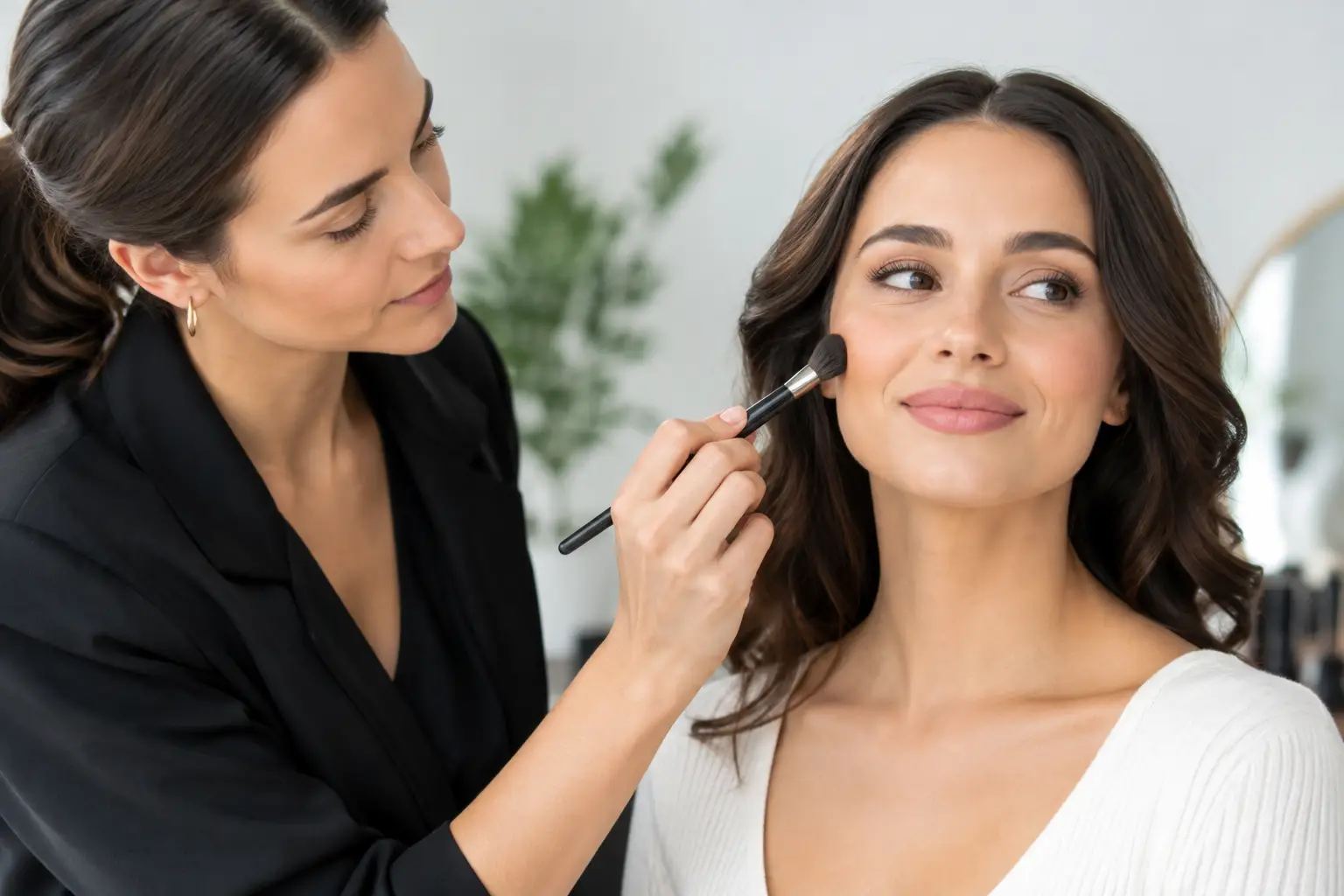
A makeup trial is especially valuable for brides and anyone with a milestone event on the calendar. It creates room to test your preferred level of coverage, see how products wear on your skin, and make thoughtful adjustments before the day itself. Bring inspiration photos, but also be open to guidance on what will translate best with your features, skin, and event lighting.
At Taylor Bailey Makeup Artist, shade selection is approached as part of the full experience: careful skin preparation, attentive listening, and makeup that looks polished in person and on camera. The most beautiful result is not a copy of someone else’s look. It is color chosen with enough care that you feel recognized when you look in the mirror – confident, comfortable, and fully yourself.