How to Match Makeup Undertones With Confidence
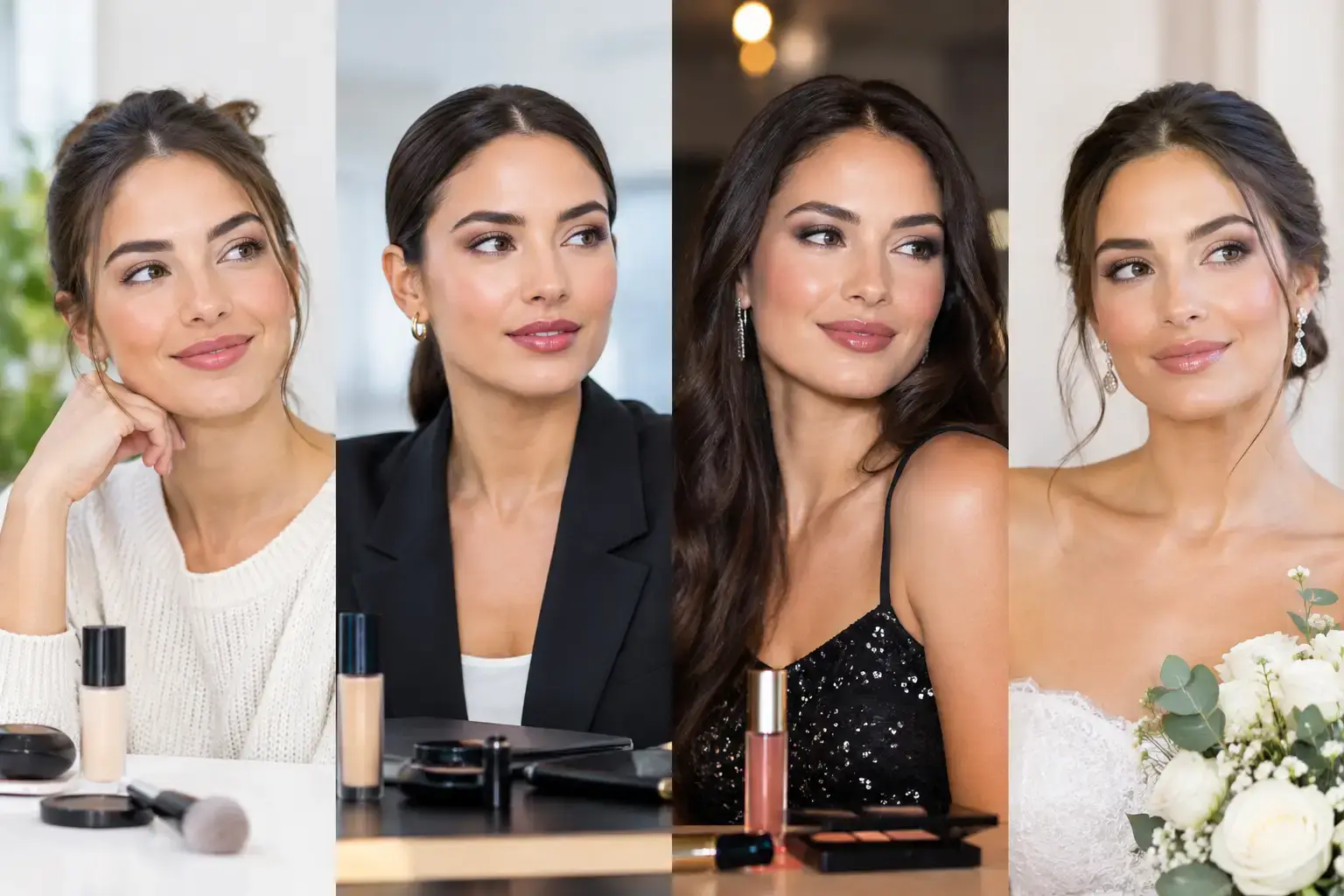
A foundation that looks perfect on the back of your hand can look noticeably off once it reaches your jawline. Usually, the issue is not coverage or technique. It is undertone. Knowing how to match makeup undertones helps makeup blend into the skin rather than sit on top of it, which is especially important for weddings, headshots, and any occasion where you will be photographed.
Undertones can feel confusing because they are not always obvious at first glance. Your complexion may become warmer in summer, lighter in winter, or temporarily flushed from skincare, stress, or the weather. Your underlying coloring is more consistent. Once you know what to look for, selecting makeup becomes much less of a guessing game.
What makeup undertones actually mean
Your skin tone refers to the depth of your complexion, such as fair, light, medium, tan, deep, or rich. Your undertone is the subtle hue beneath the surface of the skin. It is commonly described as warm, cool, neutral, or olive.
Warm undertones lean golden, peachy, or yellow. Cool undertones may show pink, rosy, red, or bluish tones. Neutral undertones have a balanced mix of warm and cool coloring. Olive skin often has a green-gray or golden-green cast and can fall anywhere from light to deep.
None of these categories are better than another, and they are not rules about what colors you are allowed to wear. They are simply useful tools for selecting complexion products that look believable in natural light. A well-matched foundation should make people notice your healthy-looking skin, not the foundation itself.
How to match makeup undertones in natural light
The most reliable place to assess your undertone is along the jawline, neck, and upper chest. The center of the face can be misleading because it often carries redness, breakouts, discoloration, or sun exposure that does not reflect the rest of your coloring.
Start with clean, bare skin
Remove foundation, tinted moisturizer, and self-tanner from the area you are checking. Then stand near a window in indirect daylight. Direct sunlight can wash out the skin, while bathroom lighting can pull overly warm, cool, or yellow depending on the bulbs.
Look at the skin near your jaw and neck rather than focusing on one tiny area. If your skin appears more golden or peachy, you may lean warm. If it looks more rosy, pink, or slightly blue, you may lean cool. If you see both, neutral may be a better fit. A soft greenish or muted cast, especially around the jawline, can indicate olive coloring.
Use clues, but do not rely on only one test
Vein color, jewelry preferences, and how easily you tan can offer hints, but they are not definitive. Blue-purple veins are often associated with cool coloring, while green-looking veins may suggest warm or olive coloring. In reality, veins can look different based on skin depth and lighting.
The same goes for jewelry. If gold, silver, and mixed metals all look beautiful on you, that may point to neutral skin, but personal style matters too. Undertone matching works best when you consider several clues together and then test actual makeup shades on the skin.
Let the foundation test settle
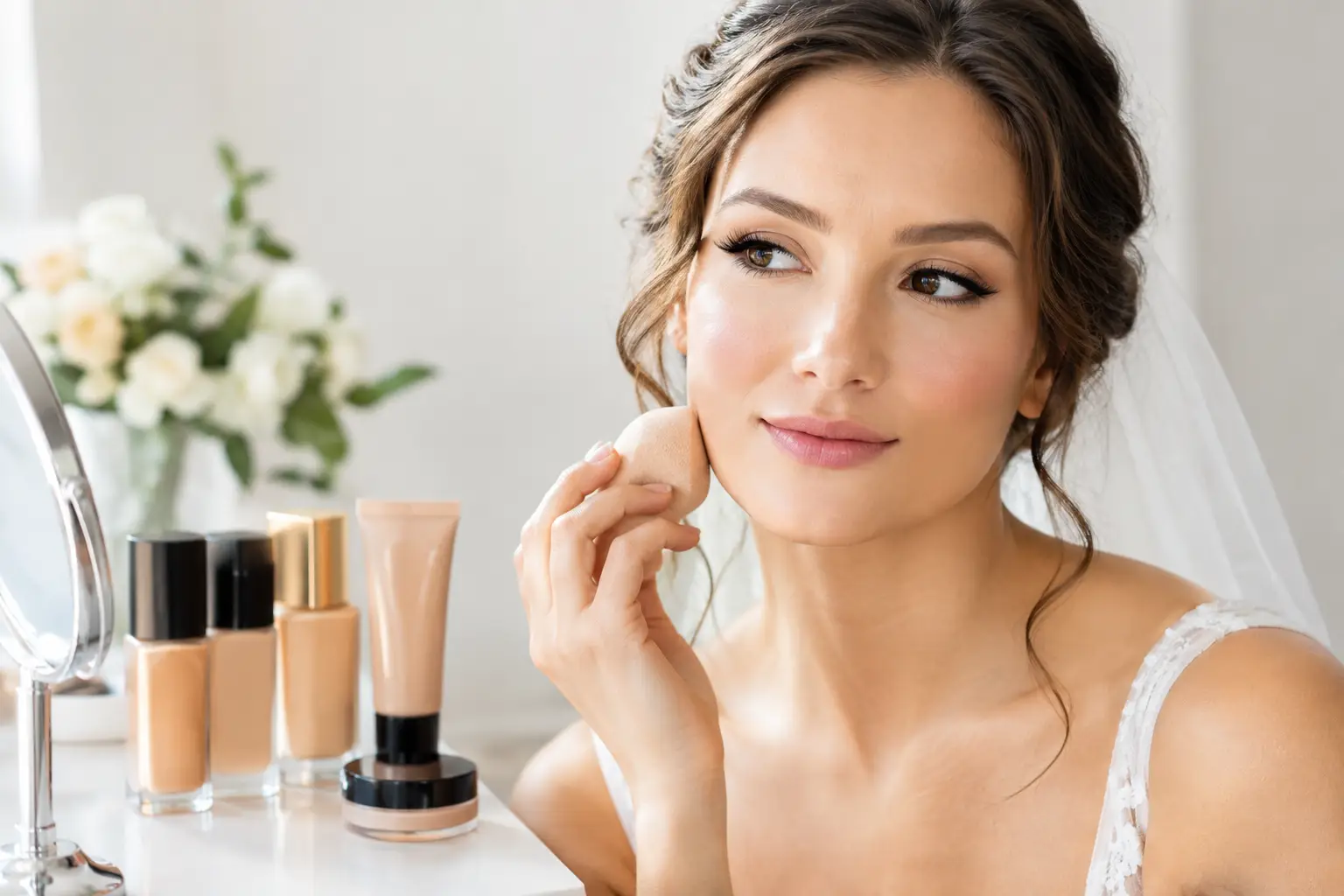
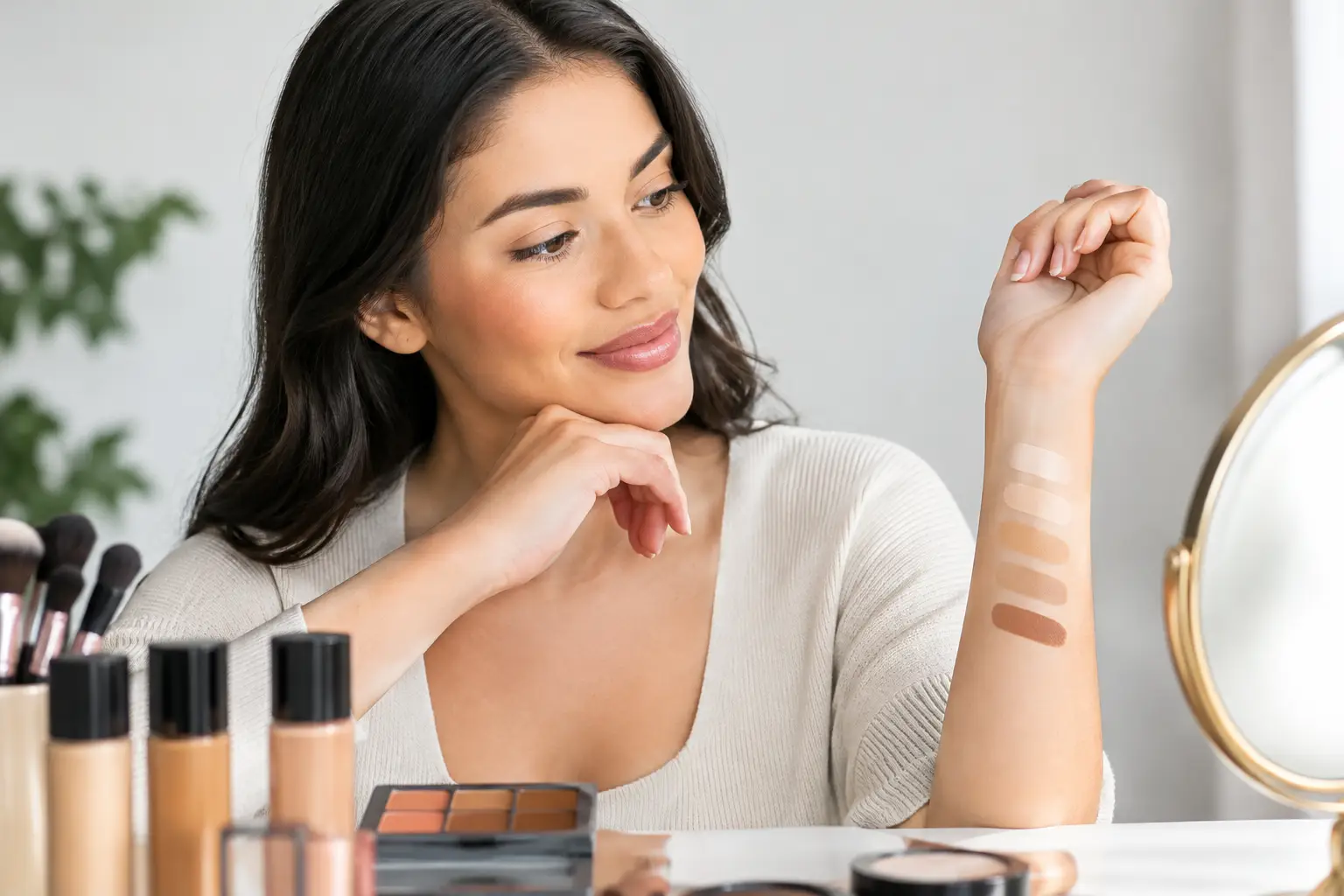
Apply two or three possible foundation shades in vertical stripes from the cheek to the neck. Do not swatch only on the wrist or hand, which may be a different depth and undertone than your face.
Give the product at least 10 minutes before deciding. Some formulas oxidize as they dry, becoming deeper, warmer, or slightly more orange. The best match will soften into the neck and chest without leaving a visible line. If a shade looks pink, peach, orange, gray, or mask-like beside your neck, it is not the right undertone, even if the depth seems close.
Foundation matching is about depth, undertone, and finish
A foundation can have the right undertone but still be too light or too deep. It can also be technically matched yet look less natural because the finish does not suit your skin. Matte formulas may cling to dry areas, while very dewy formulas can emphasize shine or texture under flash photography.
For event makeup, the goal is a complexion that resembles skin from close range and holds up through hours of movement, hugs, heat, and photographs. That often means balancing hydration, strategic powder, and thin layers of long-wear makeup instead of applying more product everywhere.
If your face is naturally deeper than your neck because of sun exposure, match the foundation to the chest and bring warmth back with bronzer where it naturally belongs. If your chest is significantly lighter because it is covered most of the year, a custom mix may be more convincing than forcing one pre-mixed shade to do everything.
Match concealer and corrector with a lighter hand
Concealer does not always need to match your foundation exactly. For blemishes, redness, and areas you want to disappear, use a concealer close to your foundation depth and undertone. A lighter concealer over a blemish can make it stand out rather than cover it.
For under-eyes, a concealer one shade lighter can softly brighten the face, but going too light can create a noticeable pale half-moon in photos. The right undertone matters here, too. A rosy or peach-toned corrector may help with blue or purple under-eye darkness, while a warm peach or orange corrector can be helpful for deeper discoloration on medium to deep skin tones.
Corrector should be used sparingly. The goal is to neutralize discoloration before concealer, not to leave a visible layer of peach, orange, or yellow beneath the eyes.
Blush, bronzer, and lip color should support your coloring
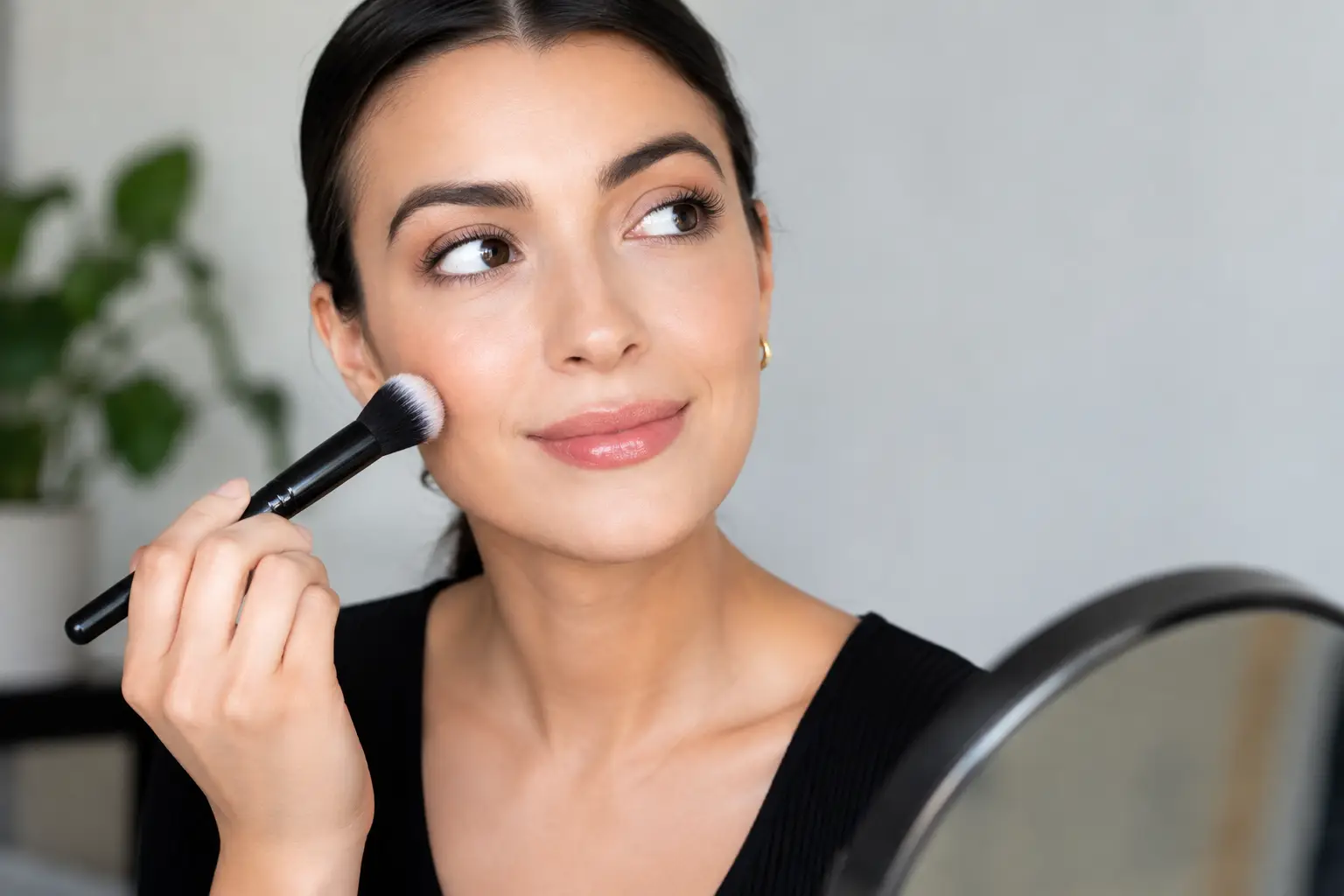
Once your foundation is balanced, color cosmetics can bring dimension and life back to the face. Warm undertones often pair beautifully with peach, apricot, terracotta, warm rose, bronze, and caramel tones. Cool undertones may be flattered by soft pink, berry, mauve, plum, and cooler rose shades. Neutral skin can often move comfortably between both families.
Olive skin is especially versatile, but it can appear muted or slightly sallow when the color choice is too beige or too pale. Rose, berry, terracotta, warm coral, and rich bronze can all be stunning, depending on depth and the rest of the look.
These are starting points, not limits. A cool-toned client can wear a warm red lip beautifully, and a warm-toned client can absolutely wear a berry blush. The difference is in the balance of the finished makeup. If a shade makes the skin look dull, disconnected, or more uneven, it may need a different lip liner, blush pairing, or eye color to bring everything together.
Consider undertones before a wedding or photo session
Photography can exaggerate a poor shade match, particularly between the face, neck, shoulders, and chest. Flash may also reveal sunscreen ingredients, excess powder, or a foundation that is too light. This is why a polished event look begins with thoughtful skin preparation and careful shade selection, not just the final application.
For brides and clients with professional photos scheduled, a makeup trial is a valuable opportunity to assess the full look in different lighting. Bring inspiration photos, but also pay attention to how you want to feel. A soft glam look can still include definition, radiance, and long-wear coverage without changing your complexion into someone else’s.
At Taylor Bailey Makeup Artist, complexion matching is treated as part of the full experience, with attention to skin type, sensitivity, natural coloring, and how makeup needs to perform throughout the event.
When your undertone is hard to identify
Some complexions truly sit between categories. Redness, hyperpigmentation, acne, melasma, and recent sun exposure can make undertones harder to read. If that sounds familiar, do not feel pressured to label yourself perfectly. Start with shades described as neutral, neutral olive, golden neutral, or balanced, then compare them directly on the jawline.
You may also need different foundation depths during different seasons, while keeping a similar undertone. That is normal. A small adjustment to depth is far more natural than wearing one shade year-round because it is familiar.
The most reassuring test is simple: when you look in the mirror, your makeup should make your skin look even, rested, and like you. If you are preparing for a meaningful day, let that feeling guide the final choice. The right undertone does not compete with your features. It allows them to come through clearly.