How to Get Makeup That Looks Natural Every Time
Natural-looking makeup should not make you feel like you are wearing a different face. It should let your skin, eyes, and features come through while giving you the polished confidence you want for a wedding, headshot, gala, or meaningful celebration. If you are wondering how to get makeup that looks natural, the answer is not necessarily using less makeup. It is using the right textures, shades, and placement for your skin.
A soft, fresh finish can still be camera-ready and long-wearing. The difference is in thoughtful preparation and thin, intentional layers rather than a one-size-fits-all routine.
Start With Skin That Is Comfortable, Not Overworked
Makeup sits on top of the skin, so skin preparation is where a natural finish begins. When skin feels dehydrated, overly oily, irritated, or textured, it can be tempting to add more foundation and powder. Unfortunately, extra coverage often emphasizes the very concerns you are trying to soften.
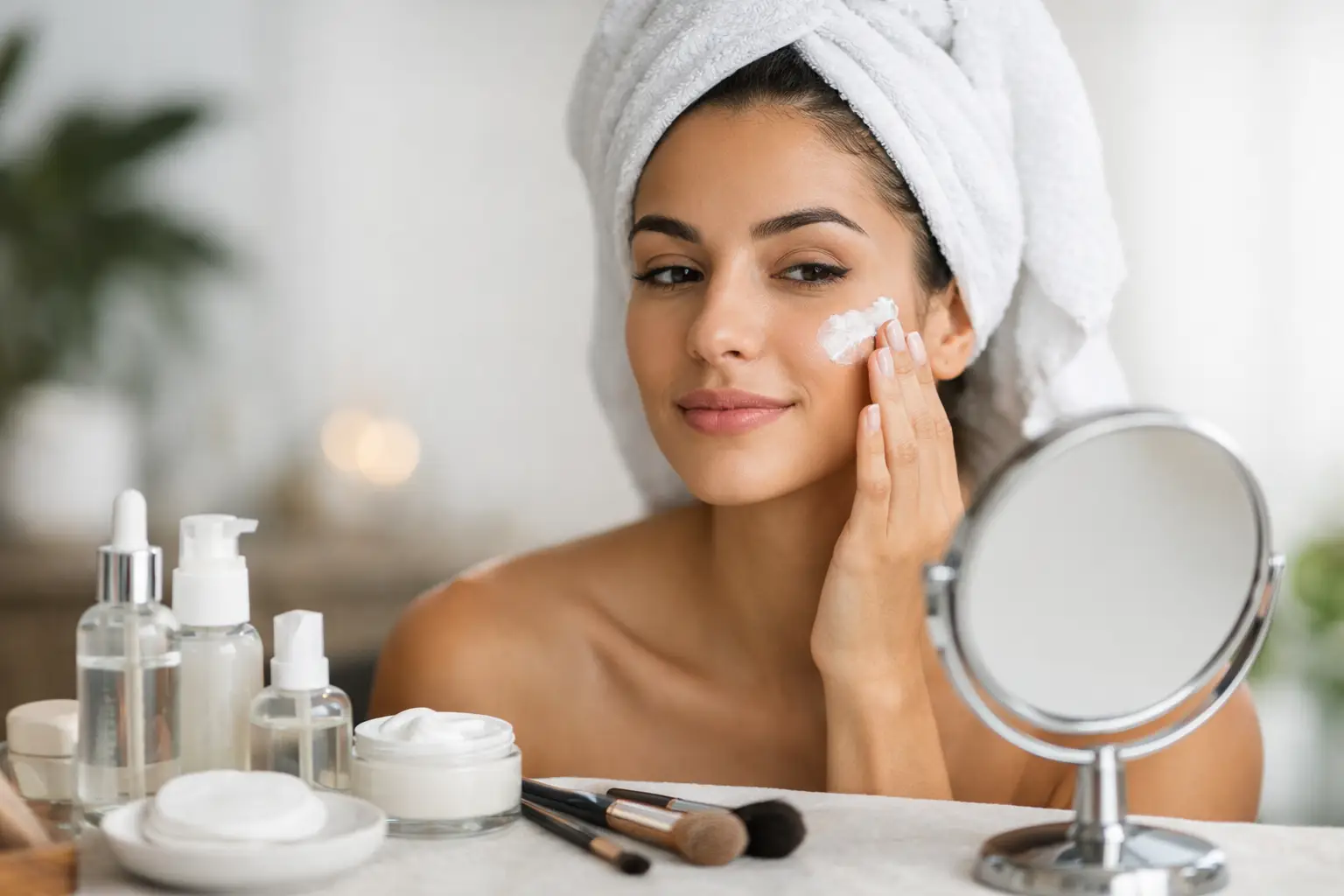
Start with a gentle cleanse and a moisturizer suited to your skin type. Dry or mature skin usually benefits from a nourishing moisturizer that has time to absorb. Oily or acne-prone skin may prefer lightweight hydration and targeted shine control through the center of the face. Even oily skin needs moisture – skipping it can leave makeup looking patchy or cause complexion products to break apart later.
Give skincare a few minutes to settle before applying makeup. For a special event, avoid testing a strong exfoliant, facial, or new active skincare product immediately beforehand. Skin that is calm and well-hydrated reflects light more evenly, which is one of the quiet secrets behind a naturally radiant complexion.
Choose Primer Only When It Has a Purpose
Primer is helpful when it solves a specific concern, such as minimizing shine around the nose, smoothing visible texture, or helping makeup last through heat and happy tears. It is not mandatory for every face. A hydrating base may be all you need if your complexion is balanced and your foundation already wears well.
The best primer should feel compatible with your skincare and foundation. If products pill, separate, or feel slippery, simplify the layers rather than trying to cover the issue with more makeup.
Use Sheer, Strategic Complexion Coverage
The most natural foundation is not always the sheerest formula. It is the formula that blends into your skin without looking dry, heavy, or noticeably different in color. For some clients, that is a skin tint. For others, especially those who want a little more coverage for photography, a medium-coverage foundation applied sparingly gives a more believable result.
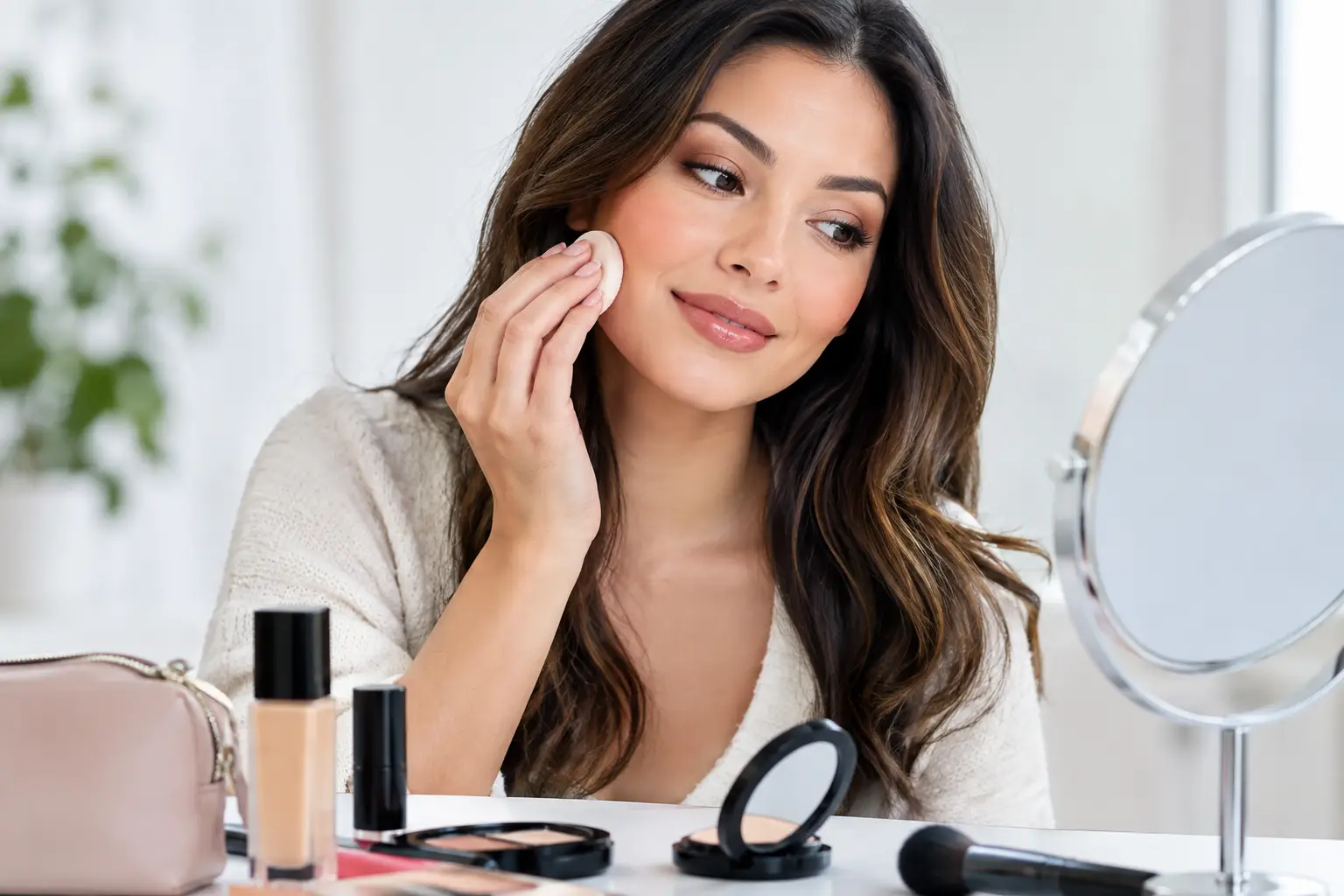
Begin at the center of the face, where redness and unevenness tend to appear first. Blend outward with a brush, sponge, or clean fingertips, leaving the outer perimeter of the face lighter when possible. This keeps natural dimension around the hairline and jaw instead of creating a flat mask of coverage.
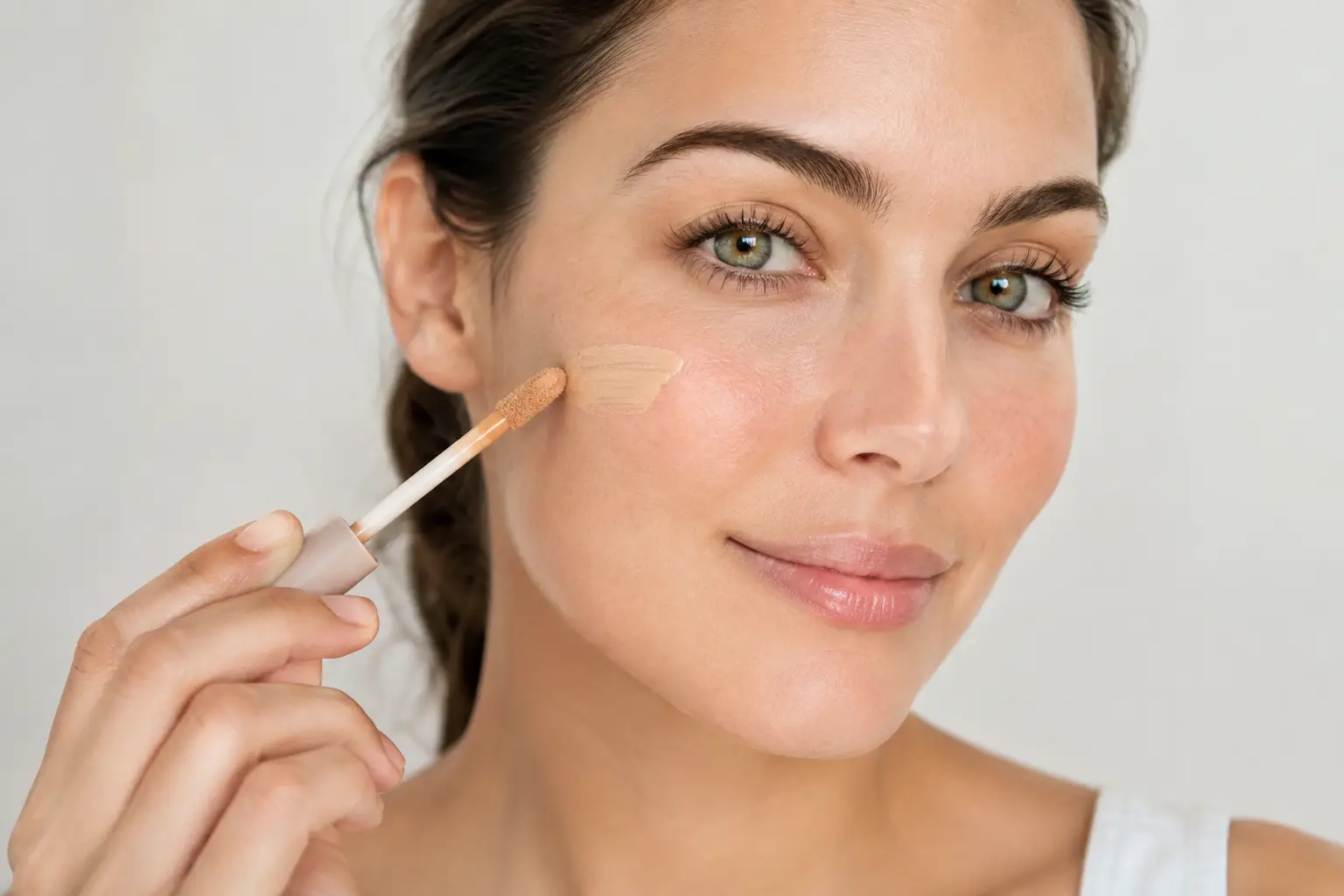
Concealer works best as a precision product. Use it under the eyes, around the nose, and directly over any blemish or discoloration that still needs attention. Applying a thick layer of concealer across the entire under-eye area can settle into fine lines and look more obvious by midday. A small amount, pressed gently into place, usually looks fresher.
Match Your Skin Tone and Your Neck
A close shade match matters more than the name on the foundation bottle. Test complexion products in natural light along the jawline and let them sit for a few minutes, since some formulas deepen slightly as they dry. Your face, neck, and chest should look connected, not like separate areas with different undertones.
If your chest is more tan than your face, a professional artist may make subtle adjustments with bronzer or body makeup for balance. The goal is harmony, not a dramatic color change.
Let Cream Products Mimic Real Skin
Cream blush, bronzer, and highlighter can create a beautiful skin-like finish because they melt into the complexion. They are especially lovely for bridal makeup, maternity photos, and events where you want a soft glow rather than a visibly powdered look.
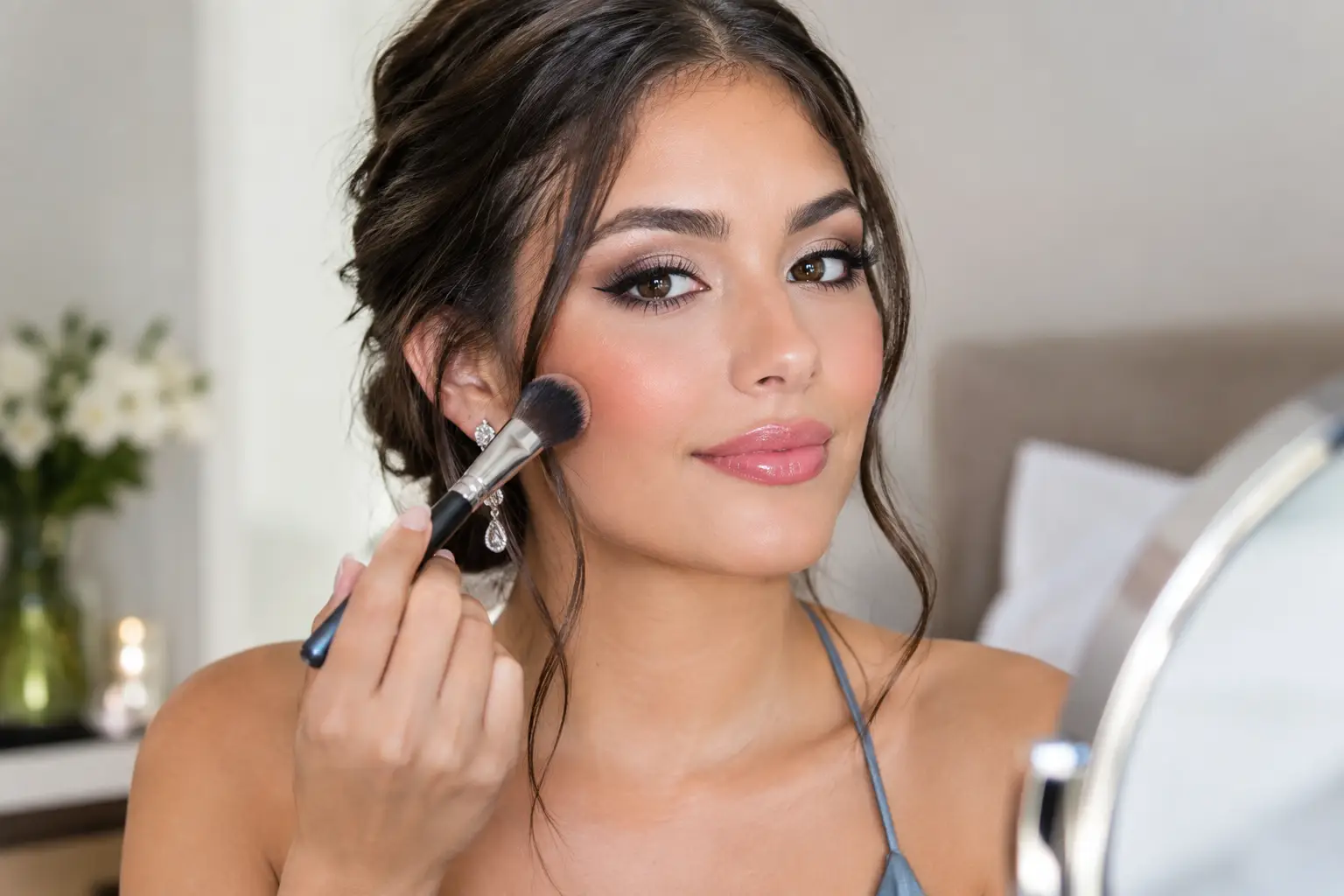
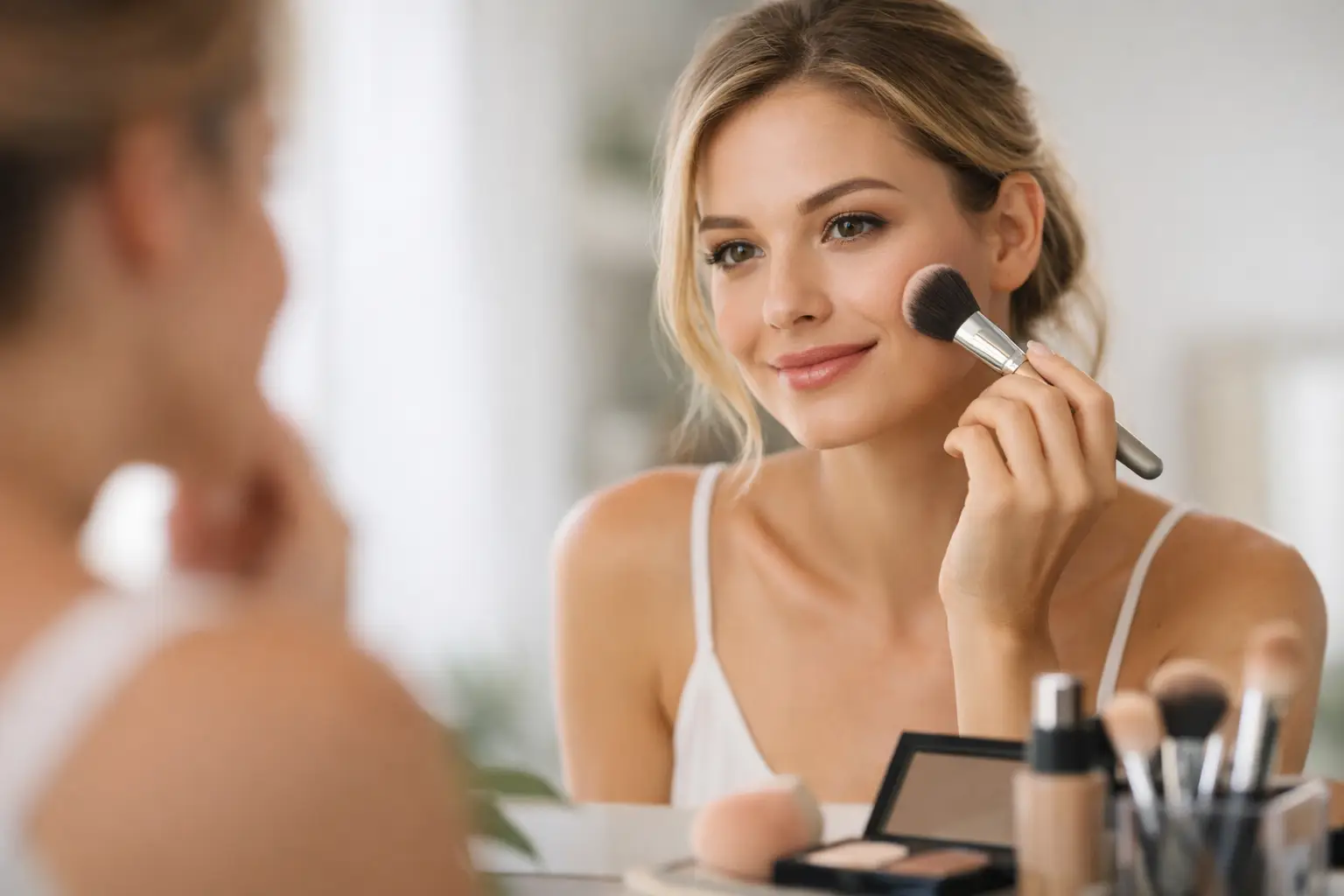
Place blush slightly higher than the apples of the cheeks and blend toward the temples for a lifted but still natural effect. Choose a shade that resembles the color your cheeks take on after a brisk walk: soft rose, peach, berry, or warm coral depending on your coloring. The right blush should bring life back to the face after foundation, not announce itself from across the room.
For bronzer, use a light hand around the temples, cheekbones, and perimeter of the face. A bronzer that is too dark, too orange, or too heavily applied can make natural makeup look muddy quickly. If contour is part of your look, keep it subtle and choose a cooler, shadow-like tone rather than a warm bronzing shade.
Highlighter is optional. A luminous cream product tapped on the high points of the cheeks can be lovely, but visible glitter is rarely necessary for an elevated natural look. Often, healthy skin prep and a radiant foundation provide enough glow.
Keep Eye Makeup Soft but Defined
Natural eye makeup is not the same as no eye makeup. A little definition around the eyes can make you look rested and polished in person and in photographs. The key is selecting shades that complement your eye color and skin tone, then blending until there are no harsh edges.
Try matte or satin neutral shadows in tones that are slightly deeper than your natural lid color. Soft taupe, warm brown, muted bronze, rosy beige, and gentle plum can all add shape without looking heavy. A small amount of shimmer on the center of the lid can brighten the eyes, especially for evening events, but it should catch the light softly rather than create a metallic finish.
Instead of a thick black line, consider tightlining the upper lash line or using brown, charcoal, or deep plum liner close to the lashes. Curling the lashes and applying a lengthening mascara often makes a greater difference than adding more shadow. Individual lashes or a delicate half lash can add definition for photos while still feeling comfortable and believable.
Build Brows and Lips Around Your Natural Shape
Brows frame the face, but overly dark or sharply outlined brows can overpower otherwise soft makeup. Brush brow hairs upward, fill only sparse areas with fine hair-like strokes, and use a tinted gel to hold the shape. Your brows do not need to be identical. Natural symmetry is more flattering than forcing them into the same exact outline.
For lips, begin with hydration. A comfortable lip balm applied early in the routine gives it time to absorb before color. Then choose a lipstick, tint, or gloss close to your natural lip tone, perhaps one or two shades deeper. A softly blended liner can define the edges and improve wear without creating a harsh border.
Nude lipstick is not one universal color. The most flattering nude has enough warmth, rose, peach, or brown to complement your natural lip pigment. If a nude shade makes you look washed out, it is simply the wrong undertone, not a sign that natural makeup is not for you.
Set Makeup Where It Needs Support
Long-wear makeup does not need to look matte everywhere. The most convincing finishes usually preserve a bit of natural glow on the cheeks while setting areas that crease or become shiny, such as the under-eyes, sides of the nose, chin, and forehead.
Use a finely milled powder sparingly and press it into place instead of sweeping it broadly over the whole face. Setting spray can help marry the layers together and reduce a powdery appearance. For humid Northern Virginia and Washington, DC events, targeted powder and a reliable setting spray can make a meaningful difference without sacrificing the softness of the look.
Bring blotting papers, a lip color for touch-ups, and a small amount of powder if your event runs long. Blot first, then powder only if needed. Reapplying powder over oil again and again can make makeup look heavier as the day goes on.
Know When a Professional Application Helps
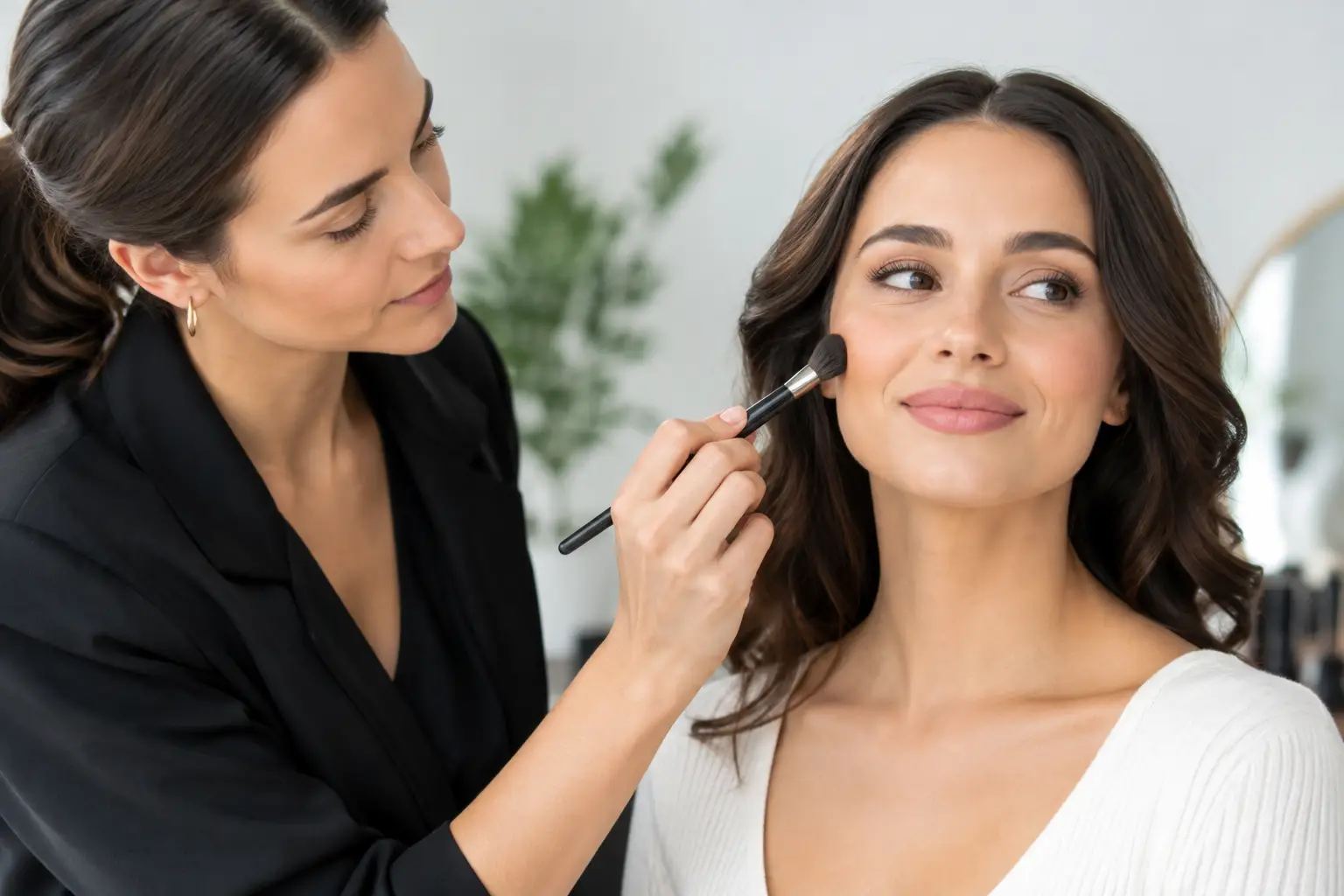
For occasions with photography, changing weather, a long timeline, or emotional moments, professional makeup offers more than a finished look. It brings a calm plan for skin preparation, shade matching, hygiene, lash application, and wear time. A makeup trial is particularly valuable for brides and anyone who does not wear makeup often, because it gives you space to refine details without pressure.
At Taylor Bailey Makeup Artist, natural soft glam is built around the individual client rather than a predetermined face chart. Sensitive, acne-prone, dry, and mature skin all call for different product choices and application techniques. What looks effortless is usually the result of careful attention to those details.
The most beautiful natural makeup is the version that still feels like you when you catch your reflection. Choose products and techniques that support your features, let your skin breathe, and leave you free to focus on the moment you are getting ready for.